What Does a Roof Inspection Cover in 2026? | Dove Roofing
A professional roof inspection covers six core areas: shingles, flashing, gutters, the roof deck, attic ventilation, and overall structural integrity. A trained inspector goes through each one methodically, documents what they find with photos, and hands you a written report that tells you what needs fixing now, what can wait, and roughly how many years your roof has left. It's not a sales visit. It's a real diagnostic.
This guide walks through what that process actually looks like, what it costs here in San Jacinto CA, and when you should stop putting it off before a small issue quietly becomes an expensive one.
Key Takeaways
Inspections cover shingles, flashing, gutters, roof deck, and attic ventilation
Takes 45 minutes to 2 hours depending on roof size
Costs $150 to $400 in the San Jacinto area
Schedule at least once a year and always after a major storm
What Is a Professional Roof Inspection, Really?
Most people picture someone climbing on the roof, poking around for a few minutes, and coming back down with a clipboard. That's not what a real inspection looks like. A proper professional roof inspection is a full evaluation of your entire roofing system, and it starts well before anyone sets foot on the shingles.
The inspector is looking at the whole picture. Not just what's visibly wrong, but what's quietly heading toward wrong. That means checking the attic from the inside, testing flashing adhesion at every penetration point, reading granule loss patterns to figure out which shingles are aging fastest. The stuff you'd never notice from the ground.
A good inspector gives you information. A great one gives you priorities. There's a difference, and you'll feel it when you read the report.
Professional Inspection vs. a DIY Check
A lot of homeowners do their own quick scan after a storm. That's not a bad habit at all. But there's a real ceiling to what an untrained eye will catch from the surface, and most of the damage that costs money isn't visible until you know what to look for.
Professionals know where problems hide. They check the underside of the deck from inside the attic. They spot early moisture intrusion before it becomes a ceiling stain. They look for subtle granule loss patterns that tell you a specific section of the roof is wearing out two years faster than everything else.
You know what a broken shingle looks like. A professional knows what a roof that's 18 months from failing looks like. That's the gap.
What Should Be in the Written Report
If an inspector finishes up and hands you a verbal summary with no documentation, ask for the written report. You're entitled to it. A proper report covers every component that was assessed, the condition of each, what needs immediate attention, and a realistic estimate of remaining roof life. Photos of anything flagged should be included. No photos means you have no record if a dispute comes up later.
What a Professional Roof Inspection Actually Covers
A lot of roofing websites say "we inspect the whole roof" and leave it there. That's not very useful. Here's what a thorough inspection actually touches.
Shingles and Surface Material
The inspector goes over every section of shingles checking for cracks, curling edges, blistering, and anything missing. They're also paying close attention to granule distribution. Granules are the tiny sand-like particles embedded into asphalt shingles that block UV and help water shed properly. When they start disappearing unevenly, it's usually the first sign that certain areas are aging faster than others.
They'll also look at the wear pattern to figure out what's driving it. Age looks different from hail damage. Installation errors look different from weather wear. It matters for deciding what to do next.
Flashing Around Penetrations
Flashing is the thin metal used to seal the seams where your roof meets a vertical surface like a chimney, skylight, vent pipe, or wall. It's one of the most common failure points on any roof, and also one of the most overlooked.
Inspectors check that every piece of flashing is properly seated, sealed, and not starting to corrode or pull away. A small gap around a chimney flashing can let water in during a heavy rain. Caught early, it's a relatively cheap repair. Left alone for a couple of years, it's a much more significant problem.
Gutters and Drainage
Gutters aren't technically part of the roof itself, but they're absolutely part of the roofing system. Clogged, sagging, or poorly pitched gutters back water up against the fascia and roof edge. That creates rot, moss growth, and exactly the kind of moisture damage that shortens a roof's life ahead of schedule.
A good inspector checks gutter condition, looks for granule buildup inside them (which is a useful indicator of accelerating shingle wear), and flags any drainage issues that are quietly adding stress to the roof.
Roof Deck and Structural Integrity
This is the component most homeowners don't think about because you can't see it from outside. The roof deck is the plywood or OSB sheeting that your shingles are nailed to. It's the structural foundation of the whole system. If moisture has been getting through, the deck is usually where it shows up first as soft spots, discoloration, or rot.
Inspectors go into the attic to check the deck from underneath when they can. They're looking for anything that's been wet, anything that shows previous water intrusion, and any areas that were patched over without fully addressing the underlying problem.
Attic Ventilation and Insulation
This is the one that tends to surprise people. Most homeowners don't connect attic ventilation to roof health, but the relationship is direct. A poorly ventilated attic traps heat and moisture, and both of those shorten shingle life from the inside out. In colder climates it also leads to ice dams. Out here in the Inland Empire, it's the heat side of that equation that does the most damage.
According to the U.S. Department of Energy, improper attic insulation and ventilation is one of the leading causes of premature roof deterioration. Inspectors check that intake and exhaust vents are clear and properly sized, and they'll flag any insulation that's blocking airflow or showing signs of moisture damage.
The Home Roof Inspection Checklist in San Jacinto CA: What Inspectors Work Through
If you've been searching for a home roof inspection checklist in San Jacinto CA, here's what a proper local inspection actually covers. This is the breakdown a qualified inspector works through on every visit.
Exterior:
Shingle condition: cracking, curling, blistering, missing sections
Granule loss and how it's distributed across the surface
Flashing at all penetration points: chimney, vents, skylights, walls
Ridge cap condition
Soffit and fascia condition
Gutter condition and drainage pitch
Moss, algae, or any organic growth
Interior/Attic:
Roof deck condition: soft spots, rot, discoloration
Signs of active leaks or past moisture intrusion
Ventilation: intake and exhaust adequacy
Insulation condition and coverage
Rafters and trusses for any signs of stress or damage
Overall Assessment:
Estimated remaining roof life
Priority repairs with urgency rating
Maintenance recommendations going forward
Photos of every flagged issue
That last point is worth repeating. Photos should be part of any professional inspection report. If your inspector can't show you what they found, you have no way to verify it or track it over time.
How Much Does a Roof Inspection Cost in San Jacinto, CA?
Most roofing websites skip this question entirely. Here's the straight answer.
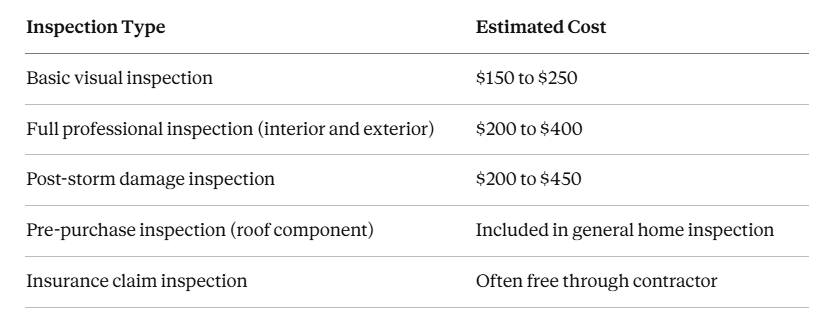
A few things worth knowing before you book. Some roofing companies offer free inspections, especially for existing customers or homeowners considering a repair or replacement. That's fine, as long as the inspector is properly licensed and you get a written report at the end. When searching for a roof inspection near me, always check that the contractor holds a current California contractor's license before you let anyone on your roof.
What you want to steer clear of is an "inspection" that's really a sales visit in disguise. If someone's on your roof for 10 minutes and comes back down with a full replacement quote, get a second opinion before you sign anything.
When Should You Actually Schedule One?
Once a year is the standard recommendation. But there are a few situations where waiting until your next scheduled visit is genuinely the wrong call.
After a Major Storm
Wind, hail, and heavy rain cause damage that you won't see from the ground. Hail is particularly deceptive because the impact craters on asphalt shingles are small and easy to miss, but they accelerate granule loss significantly over time. FEMA recommends inspecting your roof after every major storm event, especially in regions with regular wind and hail activity. And insurance claims for storm damage have filing deadlines, so speed matters.
Before Buying or Selling
A standard home inspection covers the roof, but not at the depth a dedicated roofing inspector will. If you're buying a home, a roof inspection tells you exactly what you're taking on. If you're selling, it gives you a chance to address anything before it becomes a negotiating point or a deal-killer.
When the Roof Is Over 10 Years Old
Asphalt shingles usually carry a 20 to 30-year warranty, but real-world lifespan depends on installation quality, local climate, and how well the roof has been maintained. Past the 10-year mark, annual inspections start to matter more because wear compounds faster and small problems can move quickly.
Read also: New Roof Installation Guide for Southern California Homes: Materials, Costs & Timeline
When You Notice Warning Signs
Whether you're working through your own home roof inspection checklist in San Jacinto CA or just doing a casual walk around the house, these are the signs that warrant a call this week rather than "sometime soon."
Water stains appearing on ceilings or walls inside the home
Granule debris collecting in gutters after rain
Shingles that look curled, cracked, or buckled from the ground
Dark streaking or moss across the roof surface
Any spot where you can see daylight through the attic boards
Any single one of those is enough reason to pick up the phone.
Why Homeowners in San Jacinto Keep Calling Dove Roofing
There's no shortage of roofing contractors out here in the Inland Empire. So why do people keep coming back to Dove Roofing?
Honestly, it comes down to not showing up with an agenda. Our team does the full inspection, interior and exterior, documents everything with photos, and gives you a written report that lays out what needs attention now and what can wait. No manufactured urgency. No pressure to sign anything before we're out of the driveway.
Our inspectors have been working roofs across San Jacinto, Hemet, Moreno Valley, and the surrounding area long enough to understand how the local climate behaves. The heat out here is genuinely harder on asphalt shingles than most homeowners realize. And the pattern of dry spells followed by sudden heavy rain creates specific stress points that someone from outside the region might walk right past.
When you search roof inspection near me and you land on our page, you're not dealing with a call center routing your request somewhere else. You get a local team that knows these roofs, knows this climate, and will give you a straight answer about what your home needs.
The Different Types of Roof Inspections Worth Knowing About
Not every inspection is the same thing. Knowing the difference means you can ask for the right one.
Annual Maintenance Inspection
Your standard once-a-year checkup. Full exterior and attic review, written report, maintenance recommendations. The whole point is catching small problems before they become expensive ones.
Storm Damage Inspection
Focused specifically on documenting damage from a recent weather event. This one matters for insurance claims because it establishes cause and extent with timestamped photos. Don't wait on this one if you've had a significant storm come through.
Pre-Purchase Inspection
Done before closing on a home purchase. More thorough than the roof section of a general home inspection, and gives you real leverage to negotiate repairs or price credits before the home is legally yours and the problems become yours too.
Insurance Inspection
Some insurers require periodic roof inspections before renewing policies on older homes. Having your own independent inspection done beforehand means you know what's coming and you're not caught off guard.
Frequently Asked Questions
1. What does a roof inspector look for?
A roof inspector checks shingles, flashing, gutters, fascia, soffit, the roof deck, attic ventilation, and insulation. Both the exterior surface and interior attic are examined. Everything is documented with photos and summarized in a written report with prioritized recommendations.
2. How long does a professional roof inspection take?
Most inspections take between 45 minutes and 2 hours. Larger roofs, steep pitches, or significant damage push toward the longer end. Any inspection that wraps up in under 20 minutes likely wasn't thorough enough.
3. How much does a roof inspection cost in San Jacinto CA?
A professional roof inspection in San Jacinto typically costs between $150 and $400 depending on roof size and scope. Some contractors offer free inspections for storm damage situations. Always confirm you'll receive a written report regardless of cost.
4. What are signs that you need a roof inspection?
Book an inspection if you notice water stains on ceilings, granules collecting in gutters, curling or cracked shingles visible from the ground, moss or dark streaking on the roof surface, or any daylight showing through attic boards.
5. Is a roof inspection worth it?
Yes. A routine inspection catches small problems like flashing gaps or early granule loss that cost a few hundred dollars to fix. The same issues found after they've caused interior water damage can run into thousands. Annual inspections almost always cost less than the repairs they prevent.
Conclusion
Getting a professional roof inspection once a year isn't something you do when you suspect a problem. It's how you make sure a problem never gets the chance to quietly grow into something expensive. For homeowners in San Jacinto and the broader Inland Empire, it's genuinely one of the most cost-effective things you can do to protect the biggest investment most of us will ever make.
A small flashing gap caught in a routine inspection costs maybe $150 to fix. The same gap discovered two years later after it's been leaking into the deck is a very different conversation. Schedule it. Don't skip it after storms. And make sure whoever you hire puts the findings in writing with photos, not just a verbal summary on the way out the door.
Book Your Inspection With Dove Roofing
At Dove Roofing, we keep things simple. Show up, do the full inspection, give you the complete picture in writing. No pressure, no runaround.
Serving San Jacinto, Hemet, Highland, Moreno Valley, and the greater Inland Empire.
Call us at (760) 702-7633 to schedule your inspection. Free consultations available.
