Roof Moss Removal in Highland, CA | Dove Roofing
That little patch of green on your roof? Yeah, it's not as harmless as it looks. Roof moss removal is one of those things homeowners keep pushing to the back of the list, until what started as a surface issue quietly becomes a leaking ceiling, warped shingles, or a full replacement bill that's 10 times what a cleaning would've cost. Here in Highland, CA, the cycle of dry summers and wet winters gives moss and algae exactly what they need to get comfortable on your roof. Dove Roofing has seen it play out hundreds of times, and the homeowners who act early always come out ahead.
By David Berumen, Owner, Dove Roofing and Construction· Last updated April 09, 2026
This guide covers everything: what's actually growing up there, how to get rid of it safely, what it's going to cost you, and how to make sure it doesn't come back.
Key Takeaways
Moss is the worst offender. It physically lifts shingles and holds moisture underneath
Pressure washing your roof will do more damage than the moss itself
A bleach-and-water mix or a spray product takes care of most surface growth
Zinc or copper strips near the ridge are your best bet for keeping it away long-term
Professional moss removal in Highland CA usually runs somewhere between $250 and $900
What Is Roof Moss and Why Should You Actually Care?
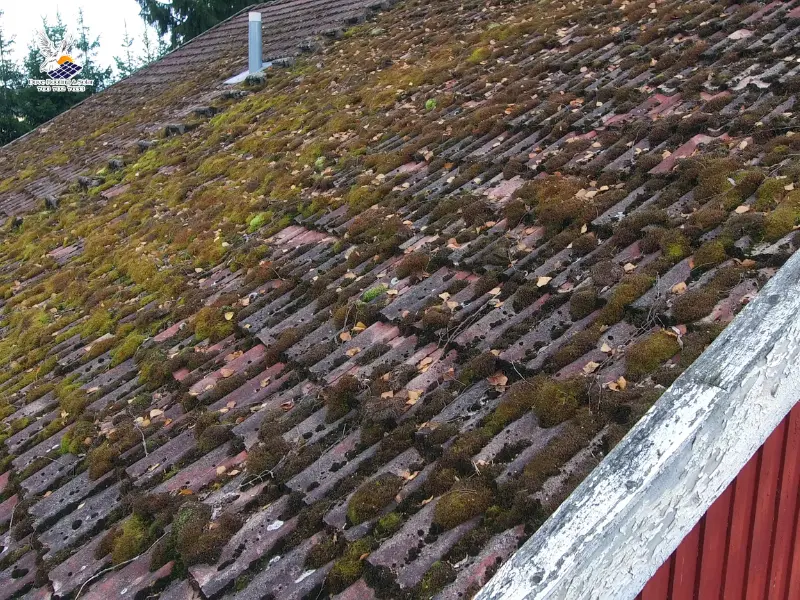
Look, moss is easy to ignore. It's green, it's flat-ish, and from the ground it can almost look like your roof just has a little character. But here's the thing: moss doesn't just sit on top of your shingles. It grows into them.
Moss has these root-like structures called rhizoids. They grip the surface of the shingle and slowly work their way underneath the edges, lifting them just enough for water to sneak in. Once that happens, moisture starts working its way down toward the roof deck. By the time you notice a water stain on your ceiling, that process has usually been going on for months. Not a fun discovery.
And beyond the physical damage, moss holds water against your shingles constantly, even on dry days. Asphalt shingles aren't meant to stay wet. The granules start breaking down, the shingles start to curl, and suddenly you've got a roof that looks and performs like it's much older than it actually is.
Okay But Is It Moss, Algae, or Mold?
Fair question. They can look pretty similar from the ground, but they're different problems with different levels of urgency.
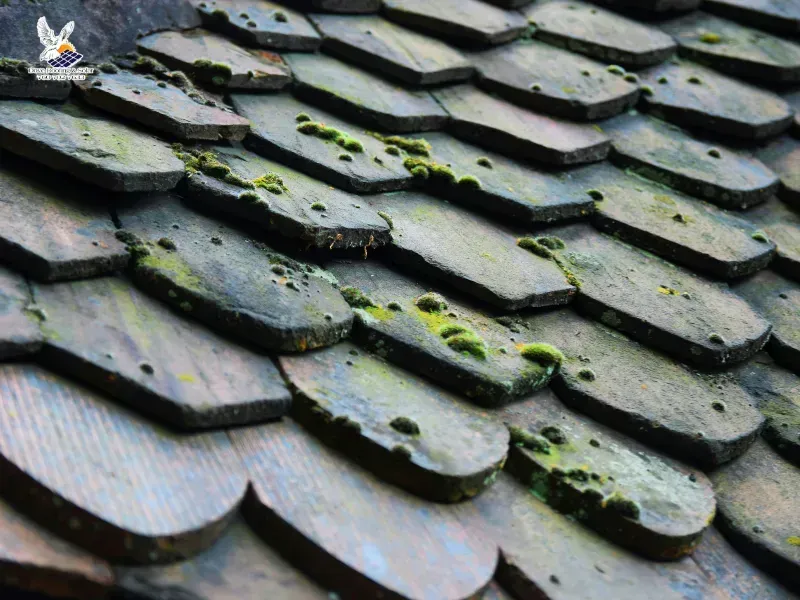
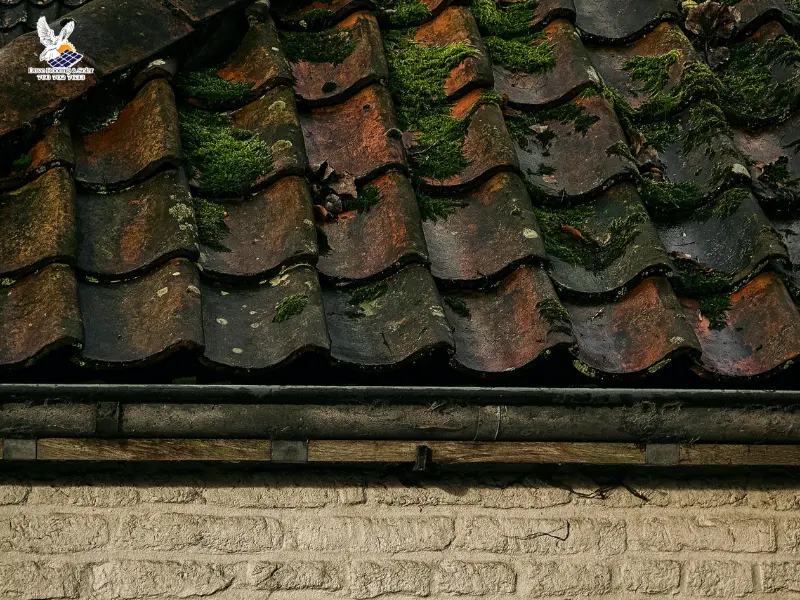
Moss is the thick, green, fuzzy stuff. It stands up off the shingle surface rather than lying flat. North-facing slopes and shaded areas are where you'll usually find it, because those spots stay damp the longest. It's the most structurally damaging of the three.
Algae shows up as dark streaks, almost black, running down the face of your shingles. It grows flat against the surface, not raised like moss. On its own, algae is mostly a cosmetic issue, but it feeds on the limestone filler in asphalt shingles over time. Left alone, it creates exactly the kind of damp, organic environment that mold loves.
Mold is the one you really, really don't want to deal with on your own. It's slimy, it spreads fast, and it doesn't stay on the exterior. Mold exposure is a documented health hazard, causing respiratory issues, headaches, and worse if it gets into your attic or walls. If you're noticing a musty smell coming from your attic, or seeing dark wet-looking patches on the roof that just don't dry out, stop. That's a call-a-professional situation, not a DIY weekend project.
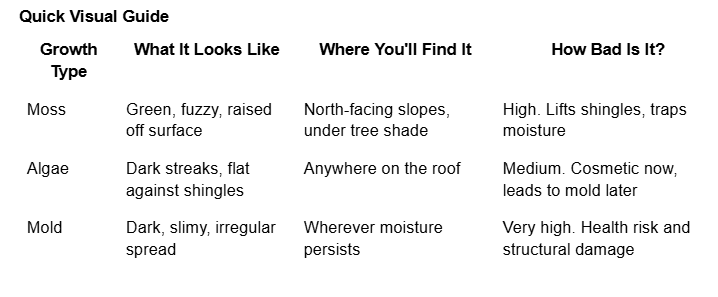
Moss: green, fuzzy, raised off surface / found on north-facing slopes, under tree shade/severity: high — lifts shingles, traps moisture
Algae: dark streaks, flat against shingles / found anywhere on the roof/severity: medium — cosmetic now, leads to mold later
Mold: dark, slimy, irregular spread / found wherever moisture persists / severity: very high — health risk and structural damage
Is Your Roof Already Damaged? Check These Signs First
Before you grab the hose and start spraying, take a minute to actually look at your roof. If any of these sound familiar, you probably need an inspection before you need a cleaning, because surface treatment alone won't fix what's already broken underneath.
Shingle edges curling or lifting, especially on the shadier, north-facing side
Granules showing up in your gutters after it rains. That gritty sand-like debris means your shingles are wearing down. The NRCA identifies granule loss as one of the earliest signs of accelerated shingle aging
Soft or spongy spots when you walk the roof, or any visible sagging in the deck
Staining on attic rafters or your interior ceiling. If moisture got that far, it's been building up for a while
Shingles that still look damp or darker than the area around them several days after the rain stopped
None of those? Good. You're working with a surface problem and you've got options.
Read also: What Does a Professional Roof Inspection Cover? (And Why You Need One in 2026)
How to Actually Remove Moss From Your Roof
Let's start with the one thing you absolutely should not do. Don't pressure wash your roof. Not even on a low setting. Pressure washing blasts the granules right off your asphalt shingles. Those granules are what block UV rays and help water shed off the surface. Without them, shingles age years faster. High pressure can also pop the seal tabs and drive water up underneath the shingles where it has no business being. You'll have a cleaner-looking roof that's structurally worse off than before you started. Just don't.
Here's what actually works.
Option 1: Spray-and-Forget Products (Best for Light Growth)
If you've got mild algae streaking or early-stage moss and you're not particularly confident on a ladder, this is your safest route. Products like Wet & Forget are made exactly for this. Mix them into a hose-end sprayer, apply from ground level or from a ladder at the gutter line, and let it work over the next 3 to 6 months.
Yeah, it's slow. But there's basically no risk of shingle damage and you never have to step foot on the roof. For light, early growth, that tradeoff makes a lot of sense.
Option 2: Bleach and Water Solution (Faster, Needs a Little More Care)
For heavier algae or moderate moss, a diluted bleach solution gets results faster. It's not complicated, but you do need to be thoughtful about runoff because bleach will damage plants and grass if it pours off the roof in any real quantity.
What to get together:
1 part oxygen bleach plus 1 part water. For heavier buildup, add half a cup of trisodium phosphate per gallon
A pump sprayer
Gloves, eye protection, clothes you don't mind wrecking
Plastic sheeting or a hose running nearby to dilute runoff near your garden beds
How it goes:
Cover any plants or shrubs directly below your work area
Apply from a ladder and avoid walking the roof surface if you can
Let it soak for a full 30 minutes. Don't rush to rinse
Rinse with a garden hose on the lowest pressure setting, working top to bottom
Don't stress if the moss doesn't fall off immediately. It dries up and blows away over the next few days
One thing worth saying again: wet moss is unbelievably slippery. If you do need to get on the roof, wear rubber-soled shoes, use a safety harness, and have someone with you. It's not the kind of job to do alone.
Option 3: When the Growth Is Really Dense
If the moss has been building up for years and it's thick and spongy, you'll need to physically loosen it before any solution can get through. A soft-bristle brush works fine. Just sweep downward toward the gutter, never against the shingle grain. A leaf blower aimed from the ridge down can help knock off the dry loose stuff first.
Honestly though, at this stage it's worth calling someone. Dense growth usually means there's been years of moisture on those shingles and there may be damage underneath worth knowing about before you invest in a cleaning.
What Does Roof Moss Removal Actually Cost in Highland, CA?
This is the question almost everyone searches for, and it's remarkable how few roofing websites give a straight answer. Here's what homeowners in Highland are actually looking at.
DIY spray product (light algae): $20–$60
DIY bleach solution (moderate growth): $30–$80 in materials
Professional soft wash (light to moderate): $250–$500
Professional cleaning (heavy/dense growth): $500–$900
Cleaning plus full roof inspection: $600–$1,100
Zinc or copper strip installation: $150–$400 depending on ridge length
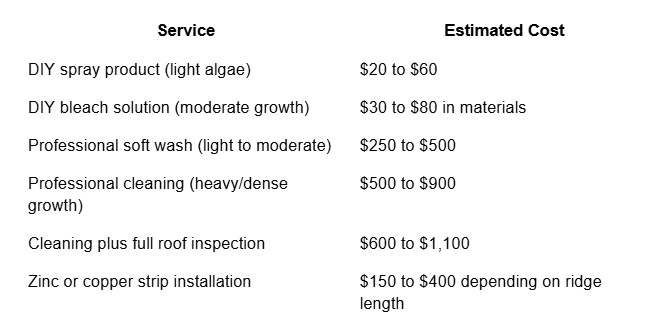
These numbers will move depending on your roof's size, pitch, how accessible it is, and what's actually up there. Get at least two written estimates before you commit to anyone. A verbal quote doesn't protect you when the bill comes in higher than you expected.
Why Homeowners in Highland Keep Calling Dove Roofing
There's no shortage of contractors out here in the Inland Empire. So why do people keep coming back to Dove Roofing?
Honestly, it comes down to this: we don't show up looking for the biggest job we can sell. We show up, look at what's actually happening on your roof, and tell you straight. Sometimes that conversation is "a $300 cleaning handles this, you're fine." Sometimes it's "there's moisture damage here that's going to be a real problem if you let it go through another winter." Either way, you get the honest answer, not a pitch designed to scare you into spending more.
Our crew has worked roofs all over Highland, Redlands, San Bernardino, and the surrounding area for years. We know how the local climate behaves. We know which roof orientations get hit hardest by afternoon sun and which stay damp the longest after rain. We've seen moss and algae at every stage, from a little green on the north slope all the way to full deck rot.
When you search moss removal service in Highland CA or roof cleaning near me, you'll get a long list of options. What's harder to find is a company that takes the time to actually explain what you're dealing with and what it'll take to fix it properly. That's what we do at Dove Roofing, every time.
How to Keep Moss and Algae From Coming Back
Cleaning the roof is step one. Keeping it clean is the part most people skip, and then they're surprised when the same problem shows up two or three years later.
Trim Back Overhanging Branches
Shade is the single biggest thing moss needs. Any branch hanging over your roof is keeping it damp longer than it needs to be, and dropping leaves and debris that feed organic growth. Get the trees trimmed back, let the sun hit the roof surface, and you've already removed a lot of what moss relies on.
Install Zinc or Copper Strips
Honestly one of the most underrated prevention moves out there. A strip of zinc or copper, 2 to 4 inches wide, installed just below the ridge cap releases metal ions every time it rains. Those ions run down the roof and make the surface inhospitable for moss and algae. Copper performs better; zinc is cheaper. According to This Old House, metal strips are one of the most reliable passive prevention options available. Put it in once and let it do its job quietly for years.
Actually Clean Your Gutters
Clogged gutters back water up against the roof edge and fascia, which creates exactly the wet, stagnant conditions moss loves. Twice a year minimum: spring and fall. After any big storm too.
Fix Small Problems Before They Grow
A cracked shingle, failing flashing, a worn patch where granules are gone. Every one of those is an entry point for moisture. A small repair done quickly is almost always far less expensive than the same issue three years later when it's had time to compound.
Get Your Roof Looked at Once a Year
An annual inspection doesn't have to be a big deal. A qualified roofer walking your roof takes maybe 30 minutes, and they'll catch early moss before it becomes a structural problem, flag anything worth keeping an eye on, and give you a clear picture of where things stand. Early-stage problems are cheap. Late-stage ones are not.
Frequently Asked Questions
1. What is the best way to remove moss from a roof?
The safest and most effective method is applying a diluted bleach-and-water solution using a low-pressure pump sprayer, then letting it soak for 30 minutes before rinsing. For lighter growth, spray-and-forget products like Wet & Forget also work well with zero risk of shingle damage. Never use a pressure washer on asphalt shingles.
2. How much does roof moss removal cost in Highland, CA?
Professional roof moss removal in Highland typically costs between $250 and $900, depending on roof size, growth severity, and whether an inspection is included. DIY options using bleach or spray products run $20 to $80 in materials. Always get written estimates before hiring a contractor.
3. Is roof moss dangerous to leave untreated?
Yes. Moss lifts shingle edges and traps moisture underneath, which leads to granule loss, shingle curling, deck rot, and eventual leaks. Left long enough, it can cause thousands of dollars in structural damage. Algae left untreated can also turn into mold, which poses serious health risks if it spreads into the attic.
4. How do you stop moss from growing back on a roof?
Install zinc or copper strips just below the ridge cap. They release metal ions with every rainfall that prevent moss and algae from taking hold. Trim overhanging trees to reduce shade, keep gutters clean, and schedule annual roof inspections to catch growth before it establishes.
5. How long does roof moss removal take?
A professional soft wash typically takes 2 to 4 hours depending on roof size. DIY bleach treatment takes about an hour to apply, then requires 30 minutes of soak time before rinsing. Full visual results appear within 3 to 7 days as the dead moss dries out and blows off naturally.
Conclusion
Here's the short version: roof moss removal isn't rocket science, but it does require the right method, the right timing, and a bit of follow-through. Catch it early and you're looking at a simple cleaning job. Ignore it and eventually you're staring down shingle damage, deck rot, and water finding its way into places it really shouldn't be.
Don't pressure wash. Don't try to handle mold yourself. Put some zinc strips up near the ridge. Get the roof checked once a year. And if you're not sure where things stand with your roof right now, that's exactly the kind of question we're here to answer.
Ready to Get It Sorted? Contact Dove Roofing Today.
At Dove Roofing, we keep it simple for homeowners across Highland, CA and the surrounding area. No runaround, no upselling. Just an honest look at your roof and a clear plan for whatever it actually needs.
Whether that's a professional moss removal, a full inspection, or just a second opinion you can trust, we're here.
Call us at (760) 702-7633 to book your free roof assessment. No obligations, no pressure.
