Commercial Roofing Contractors Near Me | Cathedral City
Commercial Roofing Contractors Near Me: What Cathedral City's Flat Roofs Actually Need
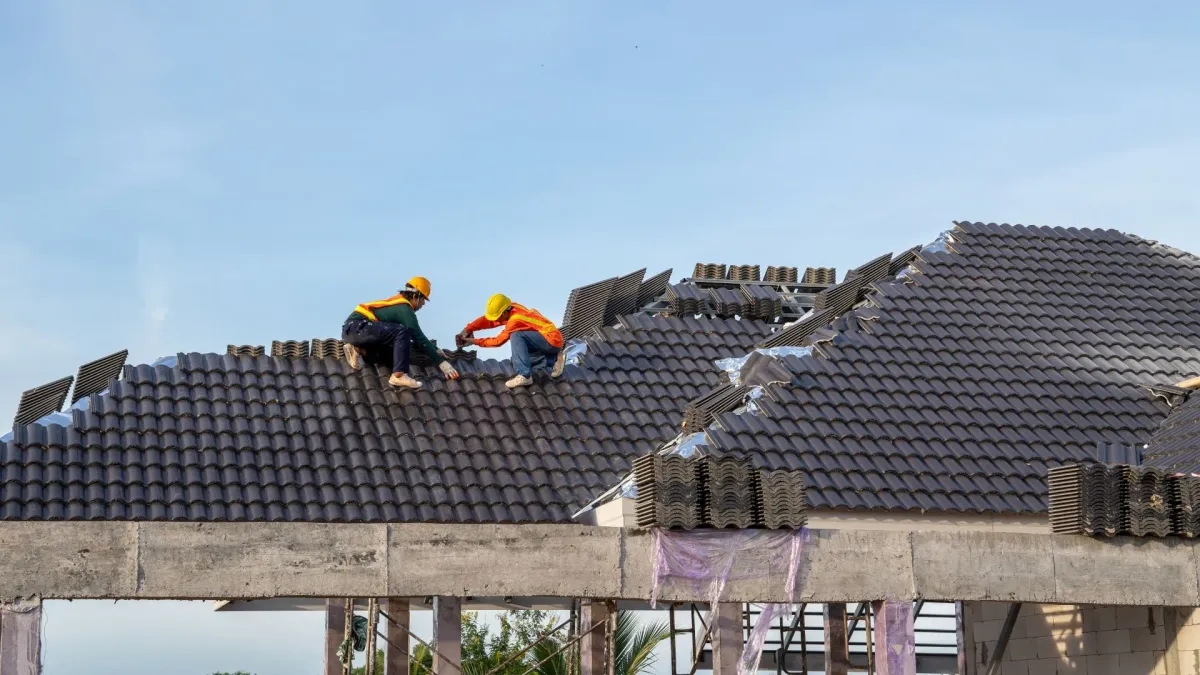
Cathedral City's commercial stock is not boutique retail. It is multi-tenant industrial parks, auto and collision shops, light manufacturing, and service-retail buildings — many of them put up in the 1980s with large, uninterrupted low-slope roof planes and a lot of equipment on top. Dove Roofing and Construction services and replaces those roofs, working from Palm Springs, ten minutes up Ramon Road. License #871103, CSLB C-39.
By David Berumen, Owner of Dove Roofing and Construction · Last updated October 2026
What systems are used on flat commercial roofs?
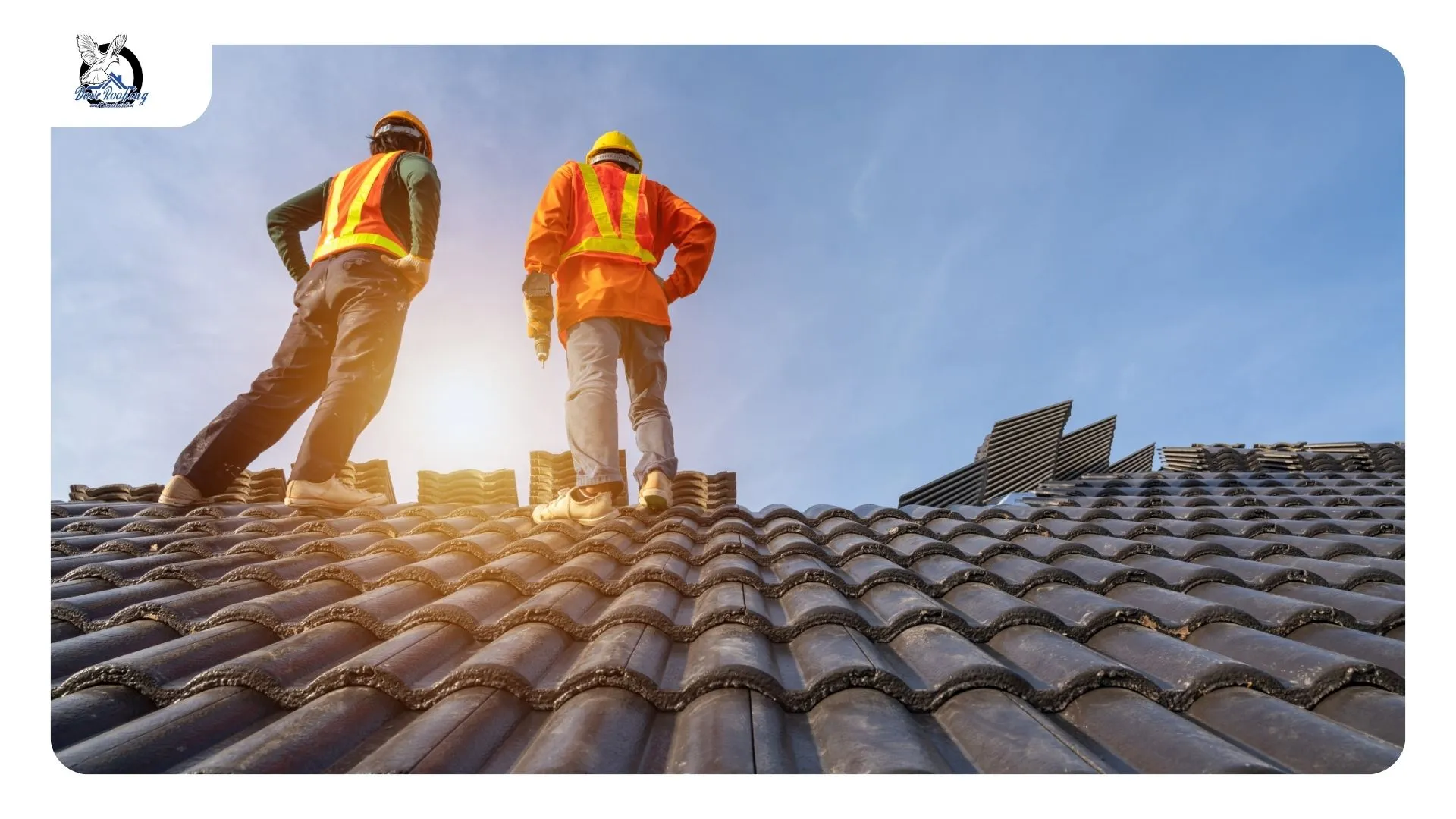
Four systems cover nearly every flat commercial roof in Cathedral City: spray polyurethane foam (SPF) with a reflective coating, modified bitumen (torch-down), built-up roofing with a cap sheet, and single-ply membrane. Which one fits depends on roof size, penetration count, rooftop equipment loads, and whether the deck can take a tear-off.
How they compare on the buildings here:
Spray polyurethane foam. Seamless and self-flashing, which matters enormously on a roof carrying twenty penetrations. It adds insulation value to a 1980s building that likely has very little, and it is renewable — recoat on schedule and the base system keeps going rather than being torn off again.
Modified bitumen (torch-down). A proven low-slope membrane, strong where there is foot traffic and mechanical service activity. Good for sectional replacement on a multi-tenant roof where you are doing one building at a time.
Built-up roofing with cap sheet. What a lot of the original Perez Road-era industrial roofs actually are. Still viable for tie-ins and certain replacements.
Single-ply membrane, including TPO. Mechanically fastened or adhered sheet, efficient on large open roof planes with few penetrations — which describes a warehouse better than it describes an auto shop. David — verify Dove installs TPO and/or PVC single-ply. The main site names foam, membrane, hot mop, and torch-down only. Same flag as the Palm Desert post.
The honest short answer for most Cathedral City industrial roofs: foam if the roof is busy with equipment, single-ply if it is a big clean plane, mod-bit where you need durability underfoot. See specialized roofing systems for how we spec each one.
How long does a commercial flat roof last?
Expect 15 to 25 years from a commercial flat roof in the Coachella Valley, with maintenance mattering more than the system you picked. Foam that gets recoated on schedule runs longer because the coating is sacrificial and renewable. Roofs that fail early fail at details — drains, scuppers, curb flashing, seams — not out in the open field.
The local wrinkle is building age. A large share of Cathedral City's industrial inventory went up in the late 1980s, which means a lot of those roofs are either on their original assembly or on a single patch-and-coat cycle that has run out. If you own or manage one of those and have not had it surveyed, the question is not whether it needs attention but how much deck is still good underneath.
Heat does the damage twice over: UV every day of the year, then a daily expansion-and-contraction cycle that works fasteners loose and opens seams, and then the monsoon arrives to find whatever opened up. Clearing drains and scuppers ahead of that season is the cheapest line item in the building's budget — see roof maintenance.
Multi-tenant roofs: whose roof is it, and who is paying
This is the part that stalls commercial roof projects in Cathedral City more than anything technical.
A single roof plane at a place like Perez Business Park — seven buildings, over 212,000 square feet of multi-tenant industrial — may sit above four or five suites with different tenants, different leases, and different levels of interest in fixing it. Under most triple-net leases the roof is the landlord's structure but the cost flows back to tenants through CAM charges, and a leak over one suite is rarely confined to that suite's roof area.
What we do about it:
Survey and document by roof area, not by suite. You get photos and findings mapped to the actual roof, so a property manager can show a board or an owner exactly what is failing and where.
Scope in phases where the budget needs it. On a multi-building park, replacing one building per year with compatible systems and clean tie-ins is often the realistic path.
Write the scope so it can be circulated. Owners, managers, and sometimes tenant reps all have to sign off. A one-line estimate does not survive that process.
If you manage property here and are trying to decide between another patch and a real replacement, that is exactly the call we will give you straight.
Heavy rooftop loads: auto, collision, and manufacturing buildings
Cathedral City's commercial roofs carry more equipment than the valley average, and it changes the roofing work.
Auto service and collision shops along the Ramon Road corridor and near the Cathedral City Auto Center run paint booth exhaust, makeup air units, and compressors — rooftop penetrations that vibrate, run hot, and sit on curbs that were flashed thirty years ago. Light manufacturing and cannabis operations in the I-1 buildings off Perez Road add dehumidification, heavy HVAC tonnage, and odor-control equipment, often retrofitted onto a roof that was never designed for it.
Three things follow from that:
Curb flashing is the whole job. More equipment means more flashing details, and every one is a future leak if it is detailed poorly. Foam's self-flashing behavior is a real advantage on these roofs.
Equipment has to be coordinated, not worked around. Where a unit needs lifting or disconnecting to roof underneath it correctly, that is scheduled with your mechanical contractor — not improvised mid-job.
Walkway pads matter. Service techs will be on that roof regularly. Without defined walk paths they will wear through the membrane in exactly the spots you cannot see from the ground.
How do you choose a commercial roofing contractor?
Commercial vetting is not residential vetting. The criteria that actually separate contractors:
References on comparable buildings — not houses. Ask for a multi-tenant industrial or service building of similar size and age, and go look at it.
Manufacturer standing. Certain warranty tiers are only available through contractors approved by the manufacturer. Ask which systems the contractor is approved to warranty and at what level.
Documentation. Photos, mapped findings, itemized scope, and closeout paperwork a property manager can file. If you have to chase it, that tells you something.
Phasing capability. Can they sequence a multi-building replacement across budget years with tie-ins that will not leak at the seams between phases?
License and insurance — C-39, current, with workers' comp certificates issued directly by the carrier.
Where we work in Cathedral City
We cover the city's commercial areas: the Perez Road Business District and its industrial parks, the Cathedral City Auto Center and the Ramon Road corridor, the Date Palm Drive retail stretch, the downtown and civic district, and the service-commercial buildings out toward the I-10 and Highway 111 access points.
We also handle commercial roofs across the valley — Palm Springs, Rancho Mirage, Palm Desert, and Indian Wells — plus the wider Riverside and San Bernardino County area. See our Cathedral City page or the portfolio.
Frequently asked questions
Which flat roofing systems do you install and service?
Spray polyurethane foam with reflective coating, modified bitumen torch-down, built-up roofing with cap sheet, single-ply membrane and coating restoration. We also service all of them — seam repairs, curb and drain flashing, and sectional replacement on multi-tenant roofs.
Can you work around an occupied business and its opening hours?
Yes. We sequence by roof section so nothing is left open overnight, stage materials and debris away from customer entrances and loading doors, and schedule noisy or odorous phases around your operating hours. On multi-tenant buildings we coordinate notice to each affected suite before work starts.
Do you work around rooftop HVAC units and equipment?
Yes — and on Cathedral City's industrial and auto-service buildings that is most of the work. Curbs, ducts, condensate lines, exhaust, and makeup air units are flashed into the new system. Units needing lifting or disconnection are coordinated with your mechanical contractor, and walkway pads are set on service routes.
What warranty comes with a commercial roofing system?
Two separate warranties: the manufacturer's on materials, and ours on workmanship. David — manufacturer warranty lengths, whether any NDL option is offered, which systems Dove is manufacturer-approved to warranty, and the workmanship warranty length. This has now been flagged on four posts and is the biggest open gap in the content program.
Can you provide references from comparable commercial buildings?
Yes. For a commercial inquiry we will point you to completed work on buildings of similar type and size rather than residential jobs, and we encourage you to go look at them. David — two or three Cathedral City or valley commercial buildings we can name, with building type and year.
Visit or Call Us
Dove Roofing and Construction
Adress:P.O. Box 289 Palm Springs, CA 92263
Phone: (760) 702-7633
Hours: Mon – Sat: 7am – 7pm | Sun: Closed
License: #871103 (CSLB C-39)
Serving Cathedral City and the Coachella Valley, including Palm Springs, Rancho Mirage, Palm Desert, Indian Wells, and Thousand Palms, plus Riverside and San Bernardino Counties.
