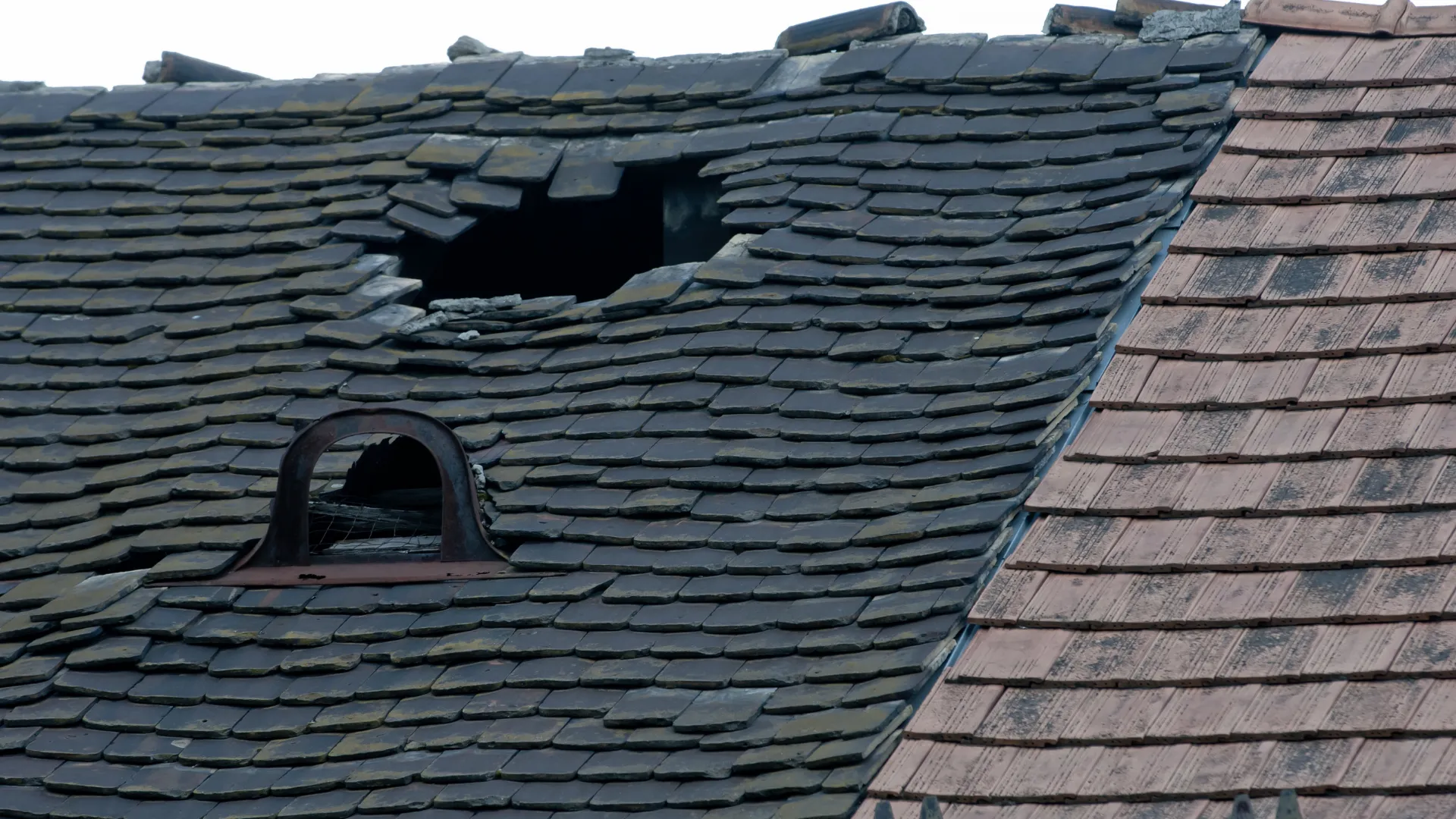
How to Repair a Metal Roof Leak: Can You DIY It
If you want to know how to repair a metal roof leak, start with the fasteners, not the sealant. Trace the water to its entry point, then replace failed screws with a wider size, reseat washers, and repair seams and flashings only where they have actually failed. Anything beyond that belongs with a licensed roofer.
By David Berumen, Owner · Last updated November 2026
Where do metal roof leaks usually start?
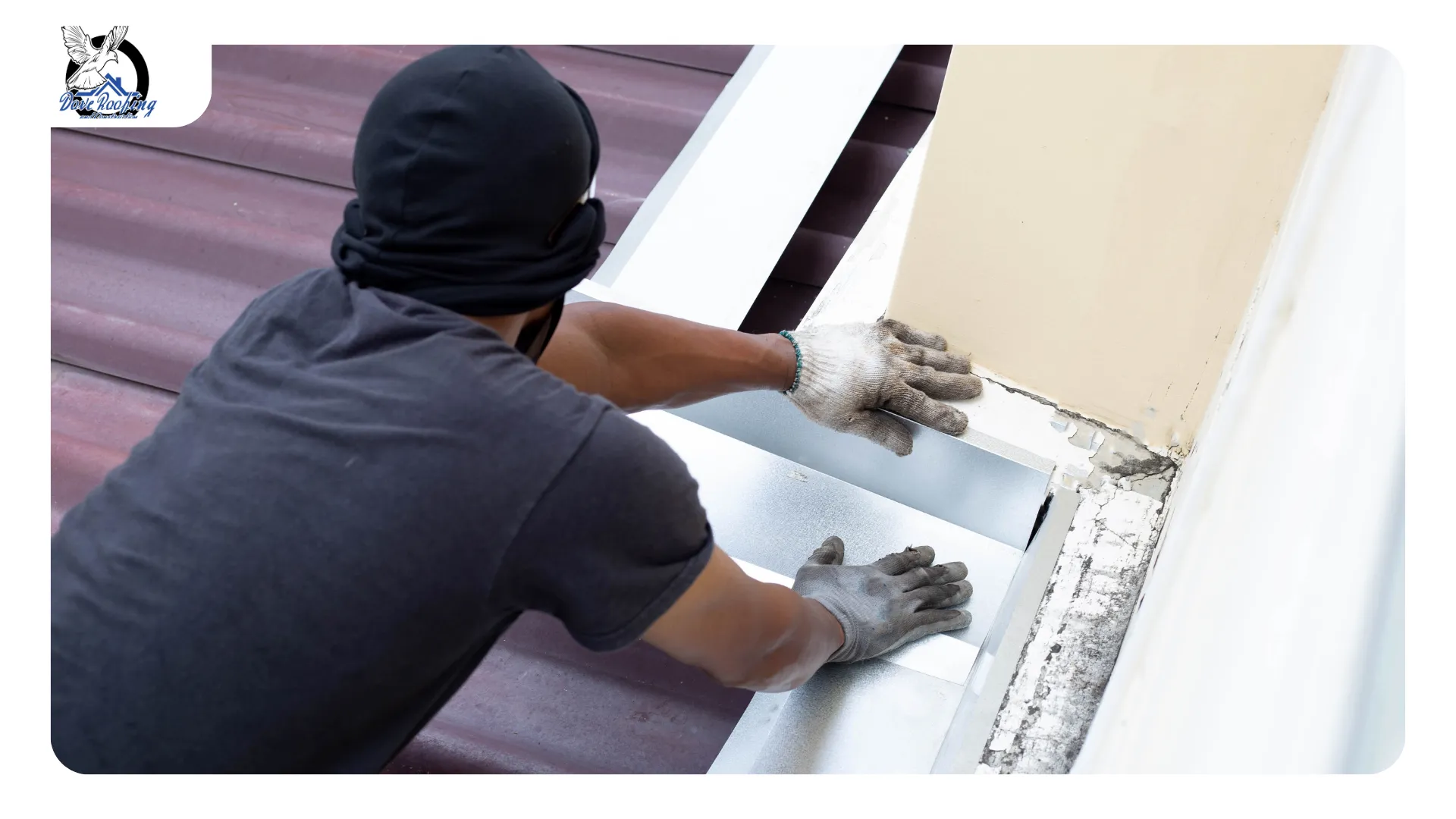
Metal panels are tough, but a metal roof is only as watertight as the places where it is joined or pierced. The panels themselves rarely let water through. The trouble starts at the screws that hold them down, the seams where panels overlap, the flashings around vents, chimneys and skylights, and the edges and valleys where water collects.
Fasteners are the first suspect. Every exposed screw has a rubber washer under its head, and that washer does the sealing. Heat, sun and years of expansion and contraction wear the washer down, and a screw that has worked loose leaves a gap for water to follow. Our Coachella Valley sun is hard on rubber, which is one reason we check screws and washers before anything else on a metal roof.
Seams and flashings come next. A seam that has opened, or a flashing that has pulled away from a penetration, lets water in along a line rather than at a single spot. That matters when you trace the leak, because the stain inside your house may sit far from the actual opening.
How do you find a leak on a metal roof?
Work from the inside first, and stay off the roof until you know where you are going. Go into the attic or look at the underside of the roof deck during or just after rain. Follow water stains, dark streaks and damp insulation uphill. Water on a metal roof runs along the panel and the framing before it drips, so the entry point is usually higher than the stain.
Once you have a likely area, look at the roof from the ground with binoculars. You are looking for missing or backed-out screws, washers that look flattened or split, panel seams that have opened, and flashing that sits away from the surface it should hug.
If the inside clues are unclear, a hose test can pin it down. Have a helper in the attic with a flashlight while you run water over one small section of roof at a time, starting low and working up the slope. Wait a few minutes at each section before moving higher. When the helper sees water, you have found the zone. Never do this alone, and never step onto a wet metal roof, which is slick.
Mark what you find with a photo. If you later call a roofer, a photo of the stain and the suspect area saves time on the inspection.
How to repair a metal roof leak caused by a loose screw?
Replace it with a screw that can bite into fresh metal, and drive it straight. A screw of the same size cannot cut new threads in a hole it has already stripped. According to the fastener maker SFS, the fix is to step up to a wider screw. Their example swaps a #14 Type A for a #17 Type AB, and you can read their guide to replacing metal roof screws for the full detail.
The steps look like this:
Back out the failed screw and check the hole and washer. If the washer is cracked or flattened, it goes in the trash with the screw.
Choose a replacement one size wider than the original, matched to the panel and the framing underneath.
Drive the new screw straight down, not at an angle.
Stop when the washer is fully seated and gently compressed. SFS warns that overdriving compromises the rubber washer, and a crushed washer leaks just like a loose one.
Age matters too. SFS says screws older than 20 years are near the end of their useful life, and most will not safely last past 30. They recommend inspecting twice a year and after extreme weather. If you find one failed screw on a roof that old, the others are likely close behind. Replacing one and walking away can mean chasing leaks all season. A full fastener check, row by row, is the better repair.
How do you seal seams and flashings, and when is sealant not a repair?
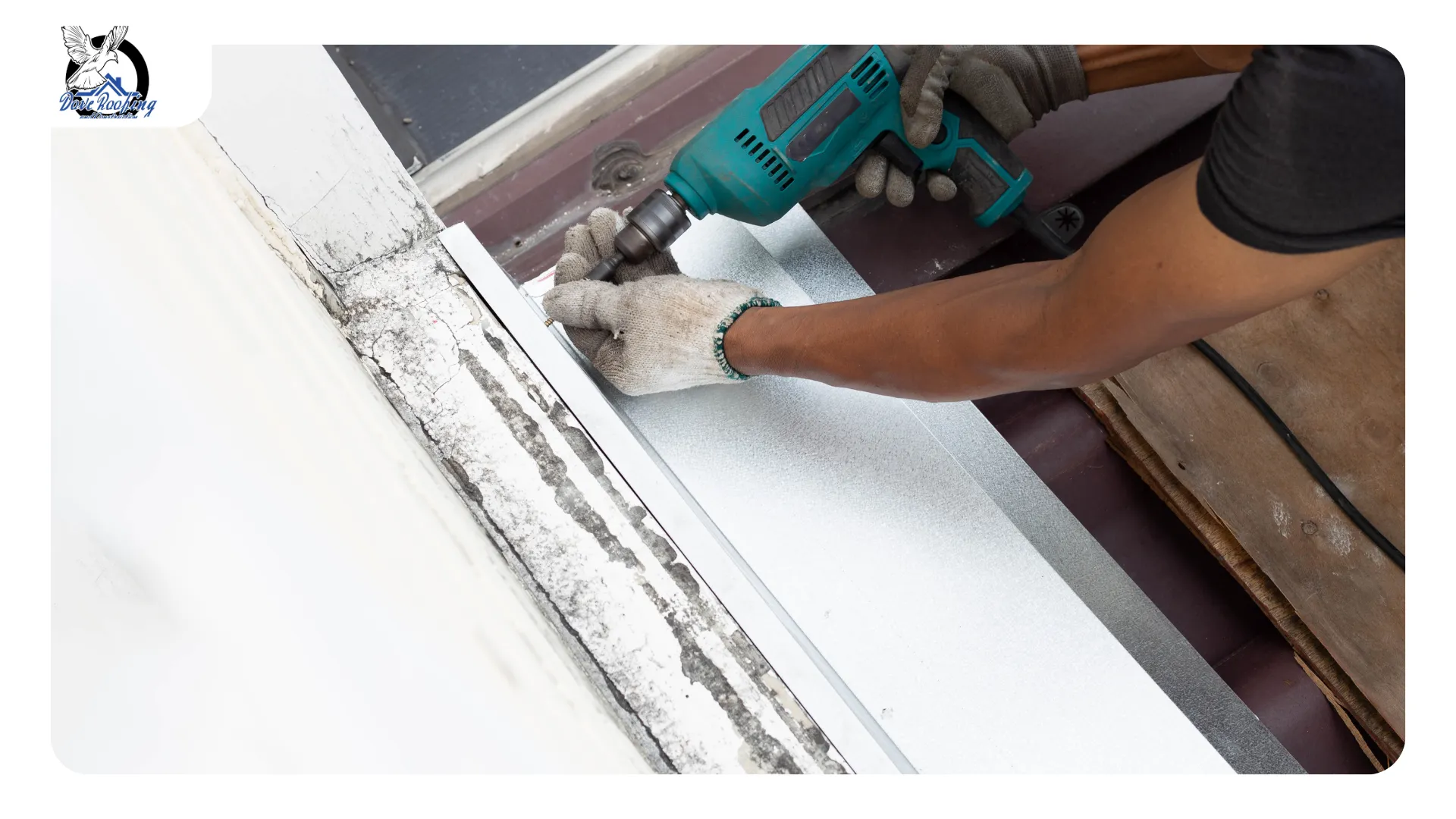
Sealant works on seams and flashing joints that are sound but weathered. It does not work as a bandage over a fastener that has failed. A bead of sealant on a stripped screw hole can slow the drip for a while, but the screw keeps backing out, the hole keeps widening, and the leak returns.
Here is a simple way to decide:
Seam or flashing joint is intact but worn: cleaning and resealing can be a reasonable repair.
Flashing has lifted, bent or pulled away: it needs to be refastened or replaced, not sealed over.
Screw is loose or stripped: replace it with a wider screw and a fresh washer.
Panel is cracked, corroded or holed: the panel itself needs attention, which is a roofer's job.
Flashings around skylights and penetrations deserve extra care because they are cut and fitted to the roof. If your leak is near a skylight, that is a different repair from a panel leak, and we handle it as its own service. Whatever you seal, work on a dry day and keep the surface clean, since sealant will not hold to dust and grime.
What can you do yourself, and what needs a licensed roofer?
You can safely do the ground-level and attic work: tracing the leak from inside, photographing stains, checking the roof with binoculars, and keeping gutters and valleys clear of debris. Those steps cost nothing and make any repair faster.
Climbing onto a metal roof is another matter. Metal is slippery, desert heat makes the surface uncomfortable and dangerous, and a fall costs far more than any repair. Replacing screws across a whole slope, reworking flashing, or patching a panel carries the same risk. If you are not comfortable on a roof, do not go up.
Call a licensed roofer when:
You cannot find the entry point after checking inside.
The leak keeps coming back after a screw or sealant repair.
Fasteners across the roof are old, rusted or loose.
Flashing, a seam or a panel is damaged.
The roof is large, steep or high.
Our roof repair service starts with a free on-roof inspection before we write an estimate, so you know exactly what is failing and what it will take. Dove Roofing and Construction holds California license #871103 (C-39).
Do you need a permit or HOA approval for a metal roof repair in Rancho Mirage?
Installing a metal roof in Rancho Mirage goes through the city building division, and that permit does not replace HOA approval. The two are separate, so having one does not mean you have the other. If your community has an architectural committee, get its approval in writing before you sign anything. Rancho Mirage HOA rules can restrict roof material, profile and color, which matters if a repair changes how the roof looks. We cover the details in our Rancho Mirage metal roof guide, including why metal over tile is generally not viable and why a full tear-off is recommended when going over a layer of shingle.
For roof repairs in general, small jobs usually need no permit and larger work does. A Title 24 threshold can turn an extensive repair into a re-roof. Our guide on how long roof repair takes in Palm Springs explains how that threshold works and what it does to your schedule. If you are weighing a repair against a bigger project, ask your roofer which side of that line your roof falls on before work begins.
What does a metal roof leak repair cost?
Published repair costs are national figures for roof repair in general, not prices for metal roofs specifically, and not a quote from Dove. The two sources we checked disagree, so treat the numbers as a range.
The cost survey Fixr puts the national average roof repair at $1,150, with a typical range of $400 to $1,900. For a roof leak specifically, it lists $350 to $1,500, and flashing repair at $200 to $600. A leak at a skylight runs $300 to $800 in the same survey. You can see the breakdown at Fixr's roof repair cost page.
This Old House reports a lower average of $531 with a range of $379 to $1,755, based on 2026 pricing, on its roof repair cost page. The gap between the two shows how much depends on the job: how many fasteners, how much flashing, how hard the roof is to reach.
For how we price leaks in the desert, see our post on roof leak repair in Palm Springs. A real number for your roof comes only from someone looking at it.
Frequently Asked Questions
How do you fix a leaking metal roof?
Find where the water enters, then repair that spot. Most often that means replacing a failed screw with a wider one and a fresh washer, refastening or replacing lifted flashing, or resealing a worn seam. If the panel itself is damaged, or you cannot locate the leak, call a roofer.
How do you find a leak on a metal roof?
Start in the attic during or just after rain and follow stains and damp spots uphill, since water travels along panels before it drips. Then inspect the roof from the ground for missing screws, opened seams and loose flashing. A hose test with a helper inside can confirm the zone.
How do you seal a leaking metal roof?
Sealant suits seams and flashing joints that are intact but weathered. It should not be used over a stripped screw hole or a lifted flashing, because those need a mechanical repair first. Clean, dry surfaces matter, and a roofer can tell you whether sealing is enough for your roof.
How do you stop a metal roof from leaking?
Inspect your fasteners twice a year and after extreme weather, as the screw maker SFS recommends. Replace any loose or stripped screws before they let water in, and watch for washers that look cracked. Screws past 20 years old are near the end of their useful life.
How do you repair a hole in a metal roof?
A hole is not a job for a bead of sealant. The right fix depends on its size, the condition of the panel around it and the roof's age. Have a roofer inspect it, and we start every repair with a free on-roof inspection before giving a written estimate.
How much does it cost to repair a metal roof?
National figures for roof repair in general run from about $350 to $1,500 for a leak according to Fixr, while This Old House reports $379 to $1,755 overall. Neither is specific to metal, and neither is a Dove quote. The only way to get a real price is an inspection of your roof.
Visit or Call Us
Call for a free roof inspection and written estimate.
Dove Roofing and Construction
Address: P.O. Box 289, Palm Springs, CA 92263
Phone: (760) 702-7633
Hours: Mon to Sat 7am to 7pm · Sun Closed
License: #871103 (C-39)
Serving Palm Springs, Rancho Mirage, Palm Desert, Cathedral City, La Quinta, Indian Wells, Desert Hot Springs, Joshua Tree, Yucca Valley, Twentynine Palms, Riverside, Redlands, Corona, Moreno Valley, Menifee, Beaumont, Banning, Calimesa, Yucaipa, Wildomar and Rancho Cucamonga.
