Best Metal Roofing in La Quinta, CA | Dove Roofing
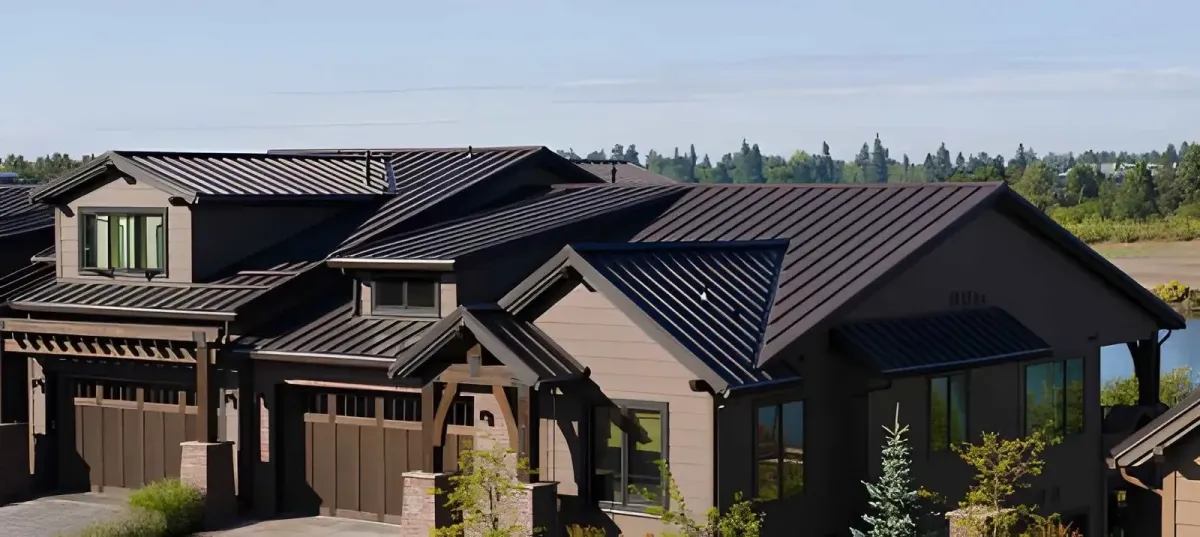
Metal roofing La Quinta CA homeowners choose for longevity and efficiency is standing seam — a concealed-fastener panel system engineered to reflect desert solar radiation, outlast the Coachella Valley's summer heat cycles, and meet California's 2025 Title 24 energy code requirements without add-on products. Dove Roofing and Construction installs and services standing seam and metal panel systems across La Quinta, Indian Wells, Palm Desert, and surrounding desert communities.
By David Berumen, Owner, Dove Roofing and Construction · Last updated July 08, 2026
Why Metal Roofing Performs So Well in the Coachella Valley
Most roofing materials weren't designed for what La Quinta dishes out between June and September. Dark asphalt shingles routinely reach surface temperatures of 160°F or more under a summer Coachella Valley sun — and those temperatures work their way into your attic and your cooling system. Metal roofing changes that equation at the material level.
A standing seam metal roof that Coachella Valley homeowners install with factory-applied PVDF (Kynar 500) coatings reflects a substantial portion of solar radiation back into the atmosphere rather than absorbing it. Surface temperatures on cool-rated standing seam metal run 50 to 60°F lower on peak summer days than a comparable dark shingle roof. On a day when La Quinta hits 115°F and a dark tile roof surface reaches 170°F, the standing seam metal panel next door may be running at 110–120°F — a range your attic and HVAC system notice.
Beyond heat performance, metal roofing handles La Quinta's late-summer monsoon season better than exposed-fastener alternatives. Standing seam's concealed fastener design — where panel attachments hide beneath overlapping seams — eliminates the penetration points where water intrusion starts in corrugated metal systems over time. That matters when a monsoon cell drops an inch of rain in 30 minutes on properties along Avenue 52 or around PGA West.
Metal roofing also carries a Class A fire rating, which is relevant across the Coachella Valley where fire risk is a growing consideration for Riverside County properties on hillside lots and in areas adjacent to desert scrub.

How Long Does a Metal Roof Last in the Desert?
A properly installed standing seam metal roof lasts 40 to 70 years in desert climates — roughly two to three times longer than asphalt shingles in the same environment. In the Coachella Valley specifically, asphalt degrades faster than it would in a coastal California climate because UV intensity and thermal cycling accelerate granule loss and brittleness. A shingle roof rated for 30 years in San Diego may realistically perform for 20 to 22 years in La Quinta.
Metal doesn't have the same vulnerability. Kynar-coated standing seam panels are rated by manufacturers for 40+ years of coastal and desert performance, with minimal maintenance requirements beyond visual inspection and occasional debris clearing from panel valleys. For La Quinta homeowners planning to hold property long-term — or who want one roofing decision to outlast a solar panel system — metal's lifespan is the defining advantage.
The one maintenance note worth making for desert installs: sand abrasion over decades can slowly dull PVDF paint finishes on south- and west-facing exposures, so inspect painted panel surfaces every 10 to 12 years and address any bare metal areas with touch-up coating before oxidation starts.
Are Metal Roofs Hot in the Summer?
This is the question we hear most from La Quinta homeowners considering the switch. The short answer: no — and the misunderstanding usually comes from confusing corrugated unpainted metal (the barn-roof image) with modern cool-rated standing seam panels.
Unpainted bare metal has high solar reflectance but low thermal emittance, meaning it reflects well but doesn't release absorbed heat efficiently. That can make an attic warm. Factory-applied Kynar 500 or Hylar 5000 coatings solve this by providing both high reflectance and high thermal emittance — the combination that qualifies metal as a cool roof under California's Title 24 energy standards and keeps attic temperatures down.
On the noise question that often follows: metal roofing installed over solid decking (standard in residential California construction) with proper underlayment is not meaningfully louder in rain than tile or asphalt. In La Quinta's climate, this point is largely theoretical — annual rainfall averages under 6 inches, nearly all of it arriving in concentrated monsoon events rather than sustained drizzle.
How Much Does a Metal Roof Cost in California?
Metal roof installation costs that Palm Springs CA and La Quinta homeowners pay range from $12 to $22 per square foot installed for standing seam steel with PVDF coatings — with total project costs on a 2,000-square-foot desert home typically landing between $24,000 and $44,000 in the Southern California market. Roof complexity, pitch, the number of penetrations (vents, skylights, solar mounting points), and tear-off requirements all move that number.
For planning purposes:
A simple gable or hip roof under 2,000 sq ft: $20,000–$30,000
Mid-size home with moderate complexity: $28,000–$40,000
Larger or architecturally complex roofs: $40,000–$55,000+
Corrugated metal panel systems with exposed fasteners run $7 to $12 per square foot and bring the entry price down, but the exposed fastener maintenance cycle (rubber-washer replacement every 10 to 15 years) offsets some of that savings over a metal roof's full lifespan.
The long-term ROI case for La Quinta is real. A standing seam metal roof that reduces cooling costs by 20 to 40 percent in a household spending $350 to $600 per month on summer electricity — a realistic range for Coachella Valley homes running AC six months a year — translates to $800 to $2,800 in annual savings. Over 40 years, the math changes substantially.
Title 24, Color, and What La Quinta Homeowners Should Know
California's 2025 Building Energy Efficiency Standards (Title 24, Part 6), effective January 1, 2026, require cool roof compliance for new construction and re-roofing projects in Climate Zone 15 — which covers La Quinta and the entire Coachella Valley. Metal roofing is inherently positioned to meet this standard; most factory-painted standing seam products from major manufacturers use cool-pigment technology that achieves CRRC (Cool Roof Rating Council) certification across a range of colors.
This means homeowners don't have to sacrifice aesthetics for compliance. Which metal roof color is best for desert climates? Light tones — white, light gray, light tan, light blue — offer the highest solar reflectance and the most cooling benefit. But darker desert earth tones (terracotta, bronze, dark green) can still be CRRC-certified using cool-pigment formulations that reflect infrared radiation even when the visible color appears dark. Kynar-coated panels are available in dozens of certified colors, including options compatible with HOA palettes in communities like PGA West, Griffin Ranch, and The Citrus Club.
As top-rated standing seam installers in the Coachella Valley, the Dove Roofing team can pull CRRC product rating sheets for any panel system we propose, confirming Title 24 compliance before your permit application is submitted to the City of La Quinta Building & Safety Division.

Neighborhoods We Serve for Metal Roofing in La Quinta and the Coachella Valley
Dove Roofing provides metal roof installation across La Quinta's neighborhoods and the broader Coachella Valley:
La Quinta Cove and The Citrus Club — serving the older cove neighborhood's varied rooflines and newer gated communities with HOA-compliant panel color selections
PGA West and Griffin Ranch — standing seam installations on custom and semi-custom desert modern homes, coordinating with HOA architectural review requirements
Indian Wells and Rancho Mirage — metal roof replacement and new installation across both incorporated city and resort-area properties
Homeowners in adjacent Riverside County communities looking for metal roofing contractors can also reach us in Palm Desert, Cathedral City, Indio, and Palm Springs. As the best metal roofing contractors near La Quinta CA, our licensed crew operates under California Contractor License #871103 and carries full liability and workers' compensation coverage on every project.
We also offer complementary services: skylight installation and repair, and roof maintenance and cleaning for existing metal roofs — both of which extend panel life and protect your long-term investment.
For context on full roof replacement scope and process, see our roof replacement services page and our Southern California roofing cost guide.
Frequently Asked Questions
Are metal roofs good for hot climates?
Yes — they're among the best-performing roofing materials in hot desert climates for precisely the reasons that make other materials struggle. Kynar-coated standing seam metal reflects 60 to 70 percent of solar radiation, runs 50 to 60°F cooler on peak summer days than dark conventional roofing, and doesn't degrade under UV exposure the way asphalt granules do over time. In Climate Zone 15 heat, metal actually performs closer to its rated lifespan than shingles do.
Do metal roofs need maintenance in the desert?
Minimal compared to other roof types, but not none. Annual visual inspection is wise — look for debris buildup in panel valleys (especially after monsoon events), check flashing and sealant around penetrations, and note any areas where paint finish appears dull or compromised. Sand abrasion is the primary wear mechanism on Coachella Valley metal roofs. Most standing seam systems in desert climates go 10 to 15 years between any substantive maintenance beyond cleaning, which is far less frequent than tile underlayment replacement or shingle granule monitoring.
Is a metal roof energy efficient in California?
Under California's Title 24 standards, cool-rated metal roofing qualifies as an energy-efficient roofing system. Studies cited by the California Energy Commission show reflective metal roofing reduces cooling loads by 15 to 40 percent in hot climate zones — a meaningful reduction in a region where AC runs six months a year. The efficiency gain is highest in La Quinta and the broader Coachella Valley because the temperature differential between roof surface and conditioned space is larger here than anywhere else in the state.
How loud is a metal roof in rain?
Installed over solid decking with proper underlayment — which is the standard residential construction method in California — a metal roof is not meaningfully louder in rain than tile or asphalt. The sound insulation provided by the decking and underlayment assembly absorbs the impact difference. This concern matters more for agricultural metal buildings without decking. For La Quinta homeowners, it's also largely academic: the city averages under 6 inches of rain per year, the majority arriving as brief, intense monsoon cells rather than the sustained rain that produces noticeable roof noise.
Can metal roofs reduce cooling costs?
Yes — and the reduction is most pronounced in desert climates like La Quinta's. Reflective metal roofing keeps attic temperatures 20 to 40°F cooler than conventional roofing, reducing the heat load your AC system fights against. For a typical La Quinta home spending $350 to $600 monthly on summer electricity, a 20 to 40 percent reduction in cooling load translates to $70 to $240 in monthly savings during peak season. Over 40 years of roof lifespan, that adds up well beyond the metal roof's cost premium over asphalt.
Visit or Call Dove Roofing
Dove Roofing and Construction P.O. Box 289 Palm Springs, CA 92263 Phone: (760) 702-7633 Hours: Mon–Sat, 7:00 AM–7:00 PM | Sun: Closed CA Contractor License: #871103
Serving La Quinta, Indian Wells, Palm Desert, Rancho Mirage, Palm Springs, Cathedral City, Indio, and the Coachella Valley.
Request a free metal roofing estimate for your La Quinta home →
