New Roof Installation Warranty in Desert Hot Springs
What Warranty Comes With a New Roof installationin Desert Hot Springs?
A new roof installation carries two separate warranties: the manufacturer's on the materials, and the contractor's on the workmanship. They cover different failures, run for different lengths, and are voided by different things. In Desert Hot Springs, the workmanship warranty is usually the one that matters.
By David Berumen, Owner · Last updated October 2026
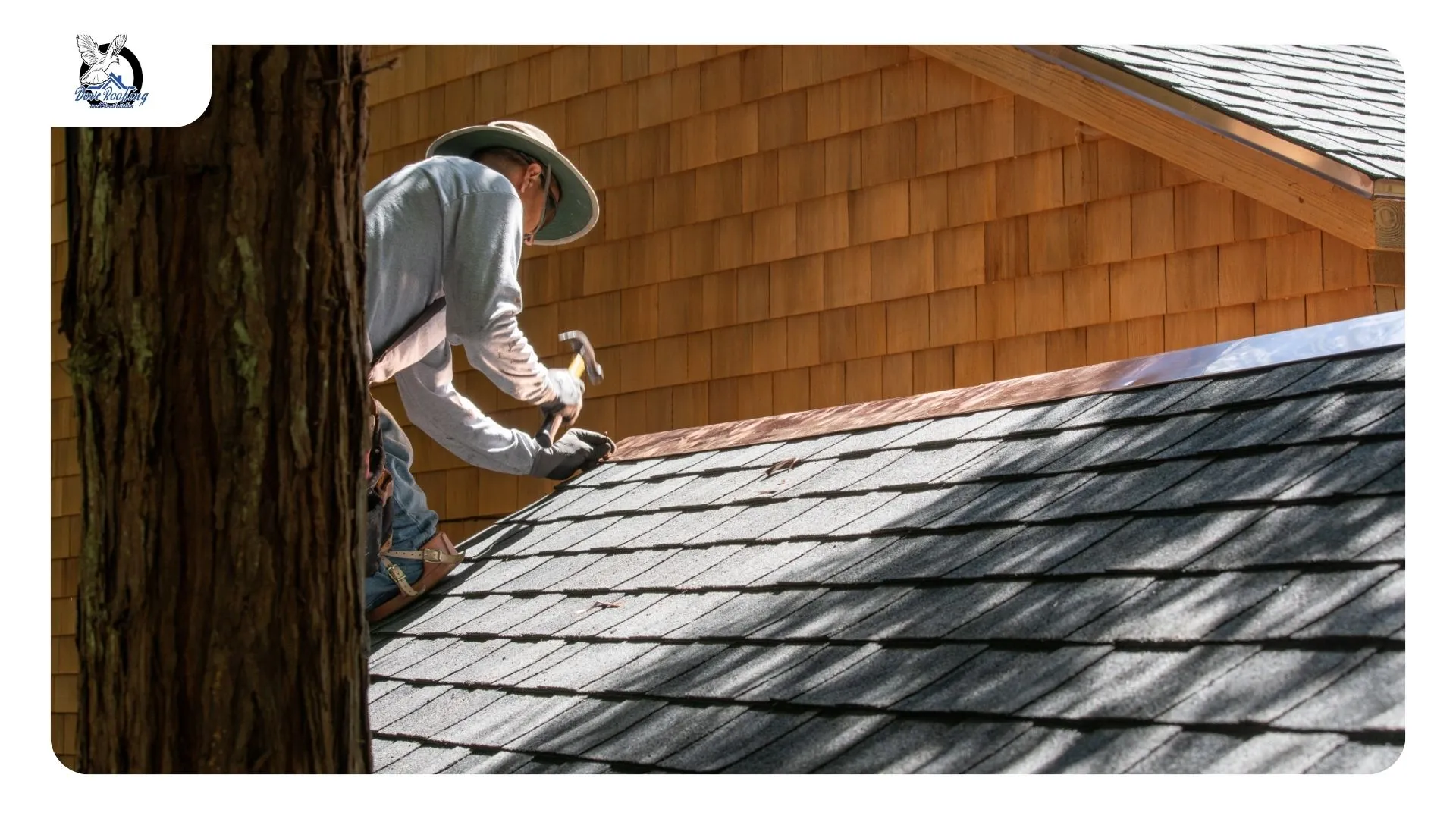
The two warranties on a new roof, and a third worth asking about
Material warranty. Issued by the manufacturer, covering defects in the product itself — a shingle that delaminates, a tile that fails prematurely, a membrane with a manufacturing flaw. Long on paper, often 30 or 50 years, and usually prorated, meaning the payout shrinks every year you own it.
Workmanship warranty. Issued by the roofer, covering installation. Flashing done wrong, fasteners in the wrong place, a valley that was never going to shed water properly. This is where almost every real-world roof failure lives, and it is the one that actually gets claimed.
System or extended warranty. Some manufacturers offer an enhanced warranty when a certified contractor installs a full matched system — their underlayment, their flashing, their fasteners, their surface material — rather than mixing brands. These can cover both material and labor, and they are the strongest coverage available. They also require the installer to hold that manufacturer's certification.
Here is the part homeowners miss: a 50-year material warranty on a roof installed badly is worth very little. Manufacturers do not pay for installation errors. If the flashing was wrong, that is a workmanship claim, and if your contractor is gone or unlicensed, you have nothing to claim against.
What voids a roofing warranty
This list is where Coachella Valley homeowners lose coverage most often, and the first item is responsible for more voided roofs out here than everything else combined.
Solar installed by someone else. Solar adoption in Desert Hot Springs is high, and most solar contractors are not roofers. Every mount is a roof penetration. Done without proper flashing — or done at all without looping in whoever warrantied the roof — it can void both the manufacturer and workmanship coverage, and it is the leading cause of leaks on roofs that were watertight the week before. If you are putting panels on a roof still under warranty, call the roofer first. Not after.
Pressure washing. Common in the valley, and it strips granules off shingles and drives water under tile. It voids most material warranties outright. Roofs should be soft washed, which is how we handle roof cleaning and maintenance.
Roofing over the old roof. Most system warranties require a full tear-off. Laying new material over existing layers usually disqualifies the enhanced coverage, which is one more reason a tear-off is the better buy here.
Unauthorized repairs. A handyman patch, a neighbor's caulk gun, or another contractor working on the roof typically ends the workmanship warranty on that area.
No maintenance record. Many warranties require periodic inspection and documented maintenance. Skip it for a decade and the manufacturer has grounds to deny.
Other trades on the roof. HVAC work, satellite dishes, new vents, antenna mounts. Any penetration by someone other than the roofer is a potential exclusion.
Ponding water. On low-slope roofs, standing water beyond the spec period is excluded under most membrane warranties regardless of who installed it.
How long should a new roof actually last in this heat?
Shorter than the warranty suggests, which is the honest answer nobody puts on a brochure.
Manufacturer ratings are set under test conditions, not under a Climate Zone 15 summer. Desert Hot Springs sits in the San Gorgonio Pass with intense year-round UV, 115-degree afternoons, wide day-to-night temperature swings, and wind-driven grit. Everything ages faster here.
Realistic service life in this climate:
System | Realistic life here | Notes |
|---|---|---|
Asphalt shingle | 15–20 years | Often warrantied for 30; UV and granule loss set the real number |
Concrete or clay tile | Tile 50+ years | Underlayment beneath needs replacing at 20–25 |
Spray polyurethane foam | 20–30 years | Renewable by recoating every 10–15 rather than replacing |
TPO single-ply | 20–25 years | Seams and flashing fail before the field does |
Standing-seam metal | 40–50 years | Longest-lasting common option in desert conditions |
Worth knowing: most material warranties explicitly exclude normal weathering and UV degradation. So the failure mode most likely to end your roof's life in Desert Hot Springs is the one the warranty does not cover. That is not a reason to skip the warranty — it is a reason to weigh installation quality and material choice far more heavily than warranty length when comparing bids.
For which system suits your structure, see new roof installation and our guide to choosing a roof installation in Desert Hot Springs.
Transfers, registration, and what California law adds
Does it transfer when you sell? Usually, but with conditions. Most manufacturer warranties allow one transfer to the first subsequent owner, often within a short window after the sale — commonly 30 to 60 days — and sometimes with a transfer fee. Miss the window and coverage ends at the sale. Workmanship warranty transferability varies by contractor. If you are buying or selling a Desert Hot Springs home with a recent roof, get the warranty paperwork and the transfer terms in escrow, not after closing.
Registration. Most manufacturer warranties require registration within a set period after installation, often 30 to 90 days, or the coverage defaults to a shorter baseline. This is the single easiest way to lose a warranty you already paid for.
What California law adds. Separate from any warranty, California sets outside time limits for construction defect claims — generally four years for patent defects that are visible on inspection, and ten years for latent defects that are not. Licensed contractors also carry a bond, which gives you recourse that an unlicensed installer cannot offer. This is general information rather than legal advice; a construction attorney can tell you how it applies to your situation.
That last point is the practical argument for checking a license before you hire. Dove Roofing and Construction holds California contractor license #871103 (C-39 Roofing), verifiable any time through the CSLB license lookup.
Where we install roofs in and around Desert Hot Springs
We cover Desert Hot Springs proper — the Mission Lakes area, the resort district along Palm Drive, and the neighborhoods off Pierson Boulevard and Dillon Road — plus Desert Edge and Sky Valley, in ZIP codes 92240 and 92241.
Re-roofs here are permitted through the City of Desert Hot Springs Building and Safety Division and must meet California's Title 24 cool-roof requirements for this climate zone. We are based in Palm Springs, a short run up Indian Canyon, and also install in Palm Springs, Cathedral City, Yucca Valley, and Joshua Tree. Completed desert work is in our project portfolio.
Frequently asked questions
What warranty comes with a new roof — materials and workmanship?
Two separate warranties. The manufacturer covers defects in the materials themselves, typically for a long but prorated term. The roofer covers installation — flashing, fasteners, detail work — which is where most real failures occur. Some manufacturers add an enhanced system warranty covering both material and labor when a certified installer uses a full matched system rather than mixing brands.
What can void a roofing warranty?
Solar panels or other equipment installed by a non-roofer, pressure washing instead of soft washing, roofing over an existing layer when the system warranty requires a tear-off, repairs by another contractor, missing required maintenance or inspections, penetrations by other trades, and ponding water on low-slope roofs. Solar installs are the most common cause in the Coachella Valley — always involve your roofer before panels go on.
How long should a new roof realistically last here?
Less than the warranty term. In Desert Hot Springs, plan on 15 to 20 years for asphalt shingle, 50-plus for tile with underlayment replaced at 20 to 25, 20 to 30 for spray foam with periodic recoats, 20 to 25 for TPO, and 40 to 50 for standing-seam metal. Intense UV, extreme summer heat, and wind-driven grit through the San Gorgonio Pass shorten most manufacturer ratings, and normal weathering is typically excluded from coverage anyway.
Does the warranty transfer if we sell the property?
Most manufacturer warranties allow one transfer to the first subsequent owner, usually within a short window after the sale and sometimes with a fee. Workmanship warranty transferability varies by contractor. Handle the paperwork during escrow rather than after closing, since missing the transfer window ends the coverage permanently.
Do you register the warranty with the manufacturer on our behalf?
Registration generally has to happen within 30 to 90 days of installation, and missing it drops the coverage to a shorter baseline term. Whoever installs your roof, confirm in writing who is responsible for filing it.
Visit or Call Us
Dove Roofing and Construction
Adress:P.O. Box 289 Palm Springs, CA 92263
Phone: (760) 702-7633
Hours: Mon–Sat 7am–7pm · Sun Closed
License: #871103 (C-39)
Serving Desert Hot Springs and surrounding areas including Desert Edge, Sky Valley, Palm Springs, Cathedral City, Yucca Valley, and Joshua Tree.
