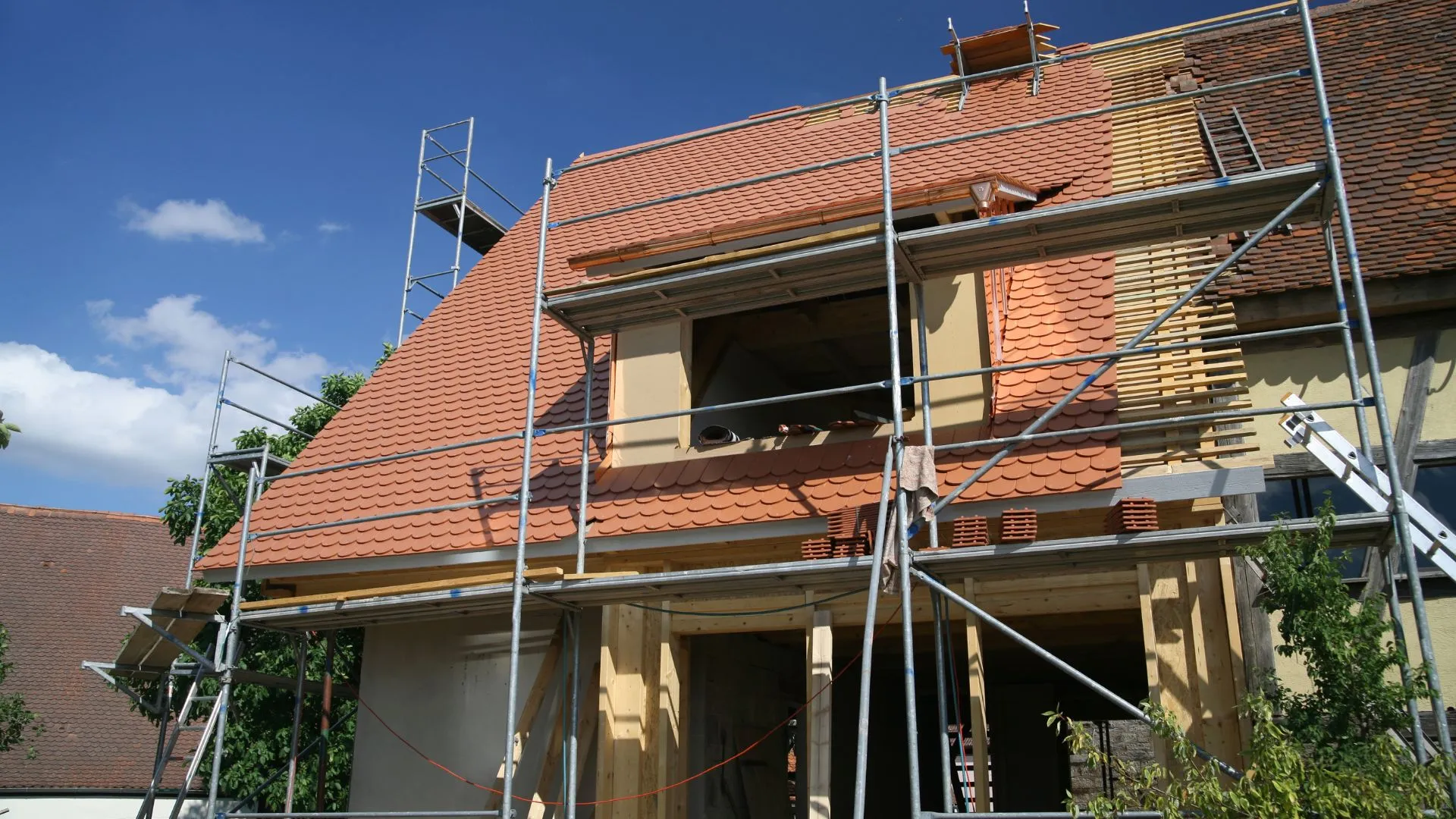
Cheapest Roof Replacement Desert Hot Springs That Lasts
Roof Replacement in Desert Hot Springs: Cheapest That Lasts
The cheapest roof replacement that genuinely lasts in Desert Hot Springs is usually a cool-rated asphalt shingle on a pitched roof, or a single-ply membrane on a low-slope one — both with a full tear-off and new flashing. The savings that end badly are almost always the ones made underneath the surface.
By David Berumen, Owner · Last updated November 2026
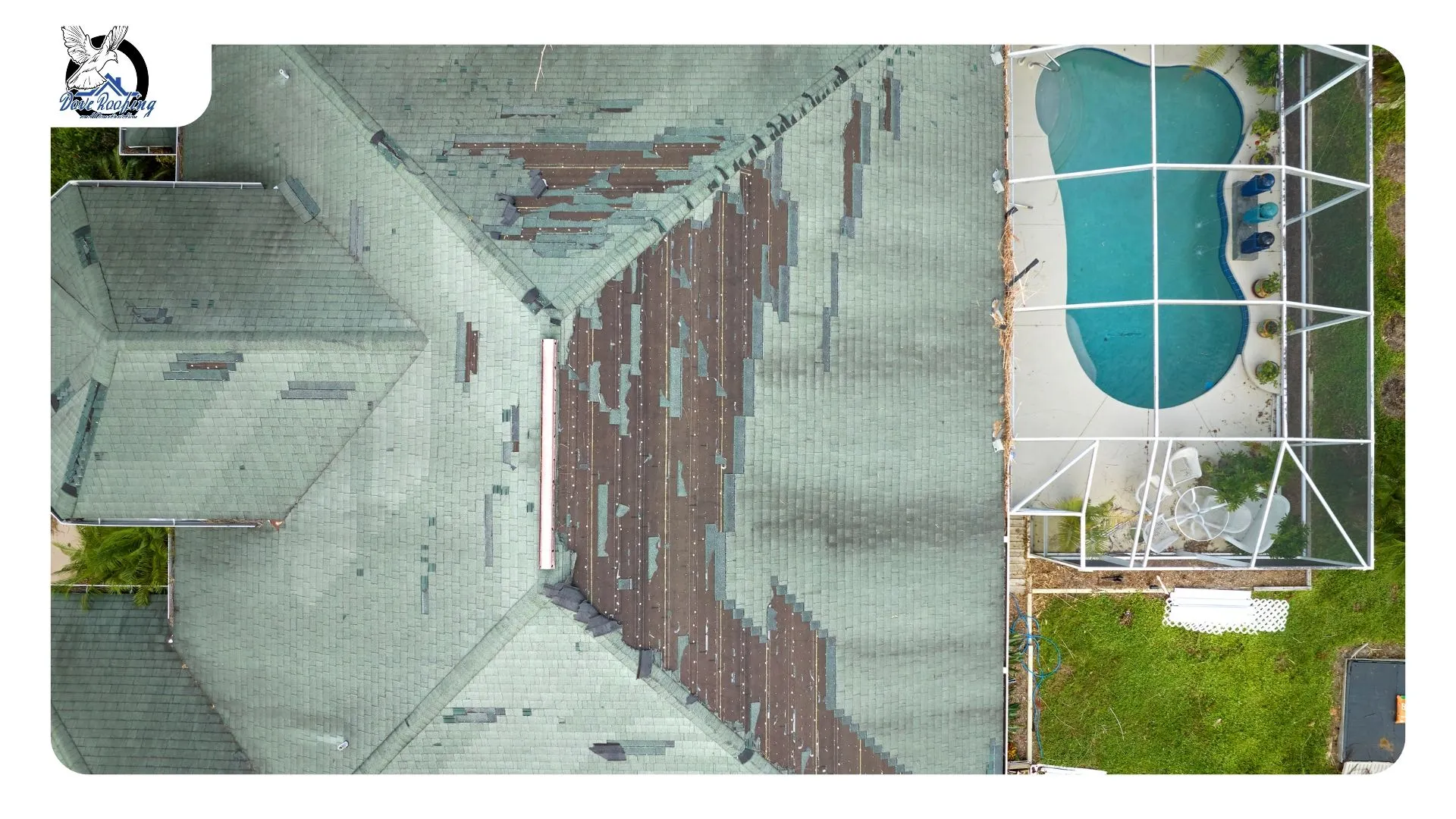
Title 24 already decided the cooling question for you
A lot of roofing advice frames reflectivity as an upgrade you choose. On a re-roof here, it mostly is not.
California requires cool roofs on low-slope roofs statewide, and on steep-slope roofs in several climate zones. Desert Hot Springs sits in Climate Zone 15, the hottest in the state. The requirement triggers when more than half the roof surface is being replaced — which is most replacements. The state's cool roof standards set the floor, and products are verified against ratings published by the Cool Roof Rating Council.
Two things follow from that, and they are both good news if you are watching the budget.
You are not paying extra for the reflective part. It is in the code, so every compliant quote already includes it. A contractor presenting cool-rating as a premium add-on is selling you something you are required to have.
The number that matters is the aged rating, not the out-of-box one. Reflectivity drops as dust settles and the surface weathers, and out here it settles fast. A product with a strong aged value is worth more than one that only looks good new.
If you want the fuller version of how reflectivity affects a summer bill, our Cathedral City cooling-cost guide covers the mechanism. For this post the point is narrower: the cooling decision is largely made for you, so the real question is where you actually still have a choice.
So what is the cheapest option that still lasts?
It depends on one thing before price — whether your roof is pitched or low-slope.
Pitched roof: cool-rated asphalt shingle. The lowest entry cost of anything that will genuinely perform, and it is a legitimate roof, not a compromise. Expect 15 to 20 years in Coachella Valley sun. That is the shortest service life of the common systems, which is exactly why it is cheapest — you are buying fewer years, knowingly.
Low-slope roof: single-ply membrane. Typically the lowest-cost compliant system for flat and low-slope sections, at 20 to 25 years. Seams and flashing details are what need watching, not the field of the sheet.
Already have sound foam? A recoat, not a replacement. This is the cheapest outcome available to anyone and the one most often missed. If the foam beneath is dry and intact and only the coating has worn, recoating restores the system for a fraction of replacement cost and resets the clock. Our foam and coating systems page covers how that assembly works.
Tile roof with failed underlayment? Lift and relay. Also much cheaper than it sounds. The tile does not wear out — the membrane beneath it does, at 20 to 25 years. Existing tile is removed, stacked, the underlayment replaced, and the same tile reset. You pay labour and underlayment plus a small breakage allowance, not a roof's worth of new tile.
The last two are the ones worth asking about directly, because a contractor quoting only full replacements will not always raise them.
Where cheap costs you twice
Every one of these saves money on the quote and loses it later. They are the difference between a budget roof and a cheap one.
Going over the old roof instead of tearing off. The single most common false economy in this valley. It hides the deck from inspection, leaves failing underlayment sealed inside the assembly, adds dead load, and usually disqualifies the stronger manufacturer warranties. It is also still subject to Title 24 on the surface area involved.
Reusing flashing. New flashing at every wall, skylight, vent and chimney is a line item a cheap bid quietly drops. Those junctions are where desert roofs leak — not the open field — so reused flashing is where your next leak is already scheduled.
The cheaper underlayment. Invisible on day one, decisive at year eighteen. On a desert roof the underlayment is the component most likely to determine when you need a roofer again, and the gap between a basic felt and a high-temperature synthetic is small money now and years of life later.
Coating applied too thin. Mil thickness is the whole product on a coated roof. A thinner application is a cheaper quote and a shorter interval before the next one.
No deck-repair rate in the contract. Nobody knows what is under an old roof until it comes off. A quote silent on that is not cheaper — it just moves the price to the moment you have least leverage.
A genuinely economical roof is cheap in the system you chose, not in the details holding it together.
Does the cheapest option stay cheapest?
Not always, and the arithmetic is worth running before deciding.
Divide any quote by the realistic service life of that system here:
System | Realistic desert service life |
|---|---|
Cool-rated asphalt shingle | 15–20 years |
TPO single-ply | 20–25 years |
Spray foam | 20–30 years, renewable by recoating |
Concrete or clay tile | Tile 50+, underlayment 20–25 |
Standing-seam metal | 40–50 years |
Shingle wins on entry price and loses on cost per year owned. Whether that matters depends entirely on your situation — and this is where honest advice stops being one-size-fits-all.
If you plan to sell within a few years, or the property is a rental, or cash now is the binding constraint, the cheapest compliant system is a perfectly rational choice and anyone telling you otherwise is selling. If you are staying twenty-plus years and can carry the higher number, the longer-lived systems genuinely cost less over the time you own them. Our roof lifespan by material guide goes deeper on the comparison.
There is also a middle path people forget: maintaining the roof you have. Twice-yearly maintenance that clears drains and catches a failing seam early is the cheapest roofing money anyone spends, and our Desert Hot Springs maintenance guide covers what an inspection catches here.
How long does a replacement take on a single-storey home?
Two to four working days is typical, and single-storey helps on every one of them.
Access is simpler, staging is faster, and tear-off debris has a shorter distance to travel. Park models and smaller structures often finish faster still. In July and August the calendar stretches because crews work first light to midday and stop when the roof surface becomes unsafe — same total hours, more days.
Whatever the schedule, every section torn off gets dried in the same day. The house is not left open overnight. Our Desert Hot Springs replacement guide covers the process and what to expect on site.
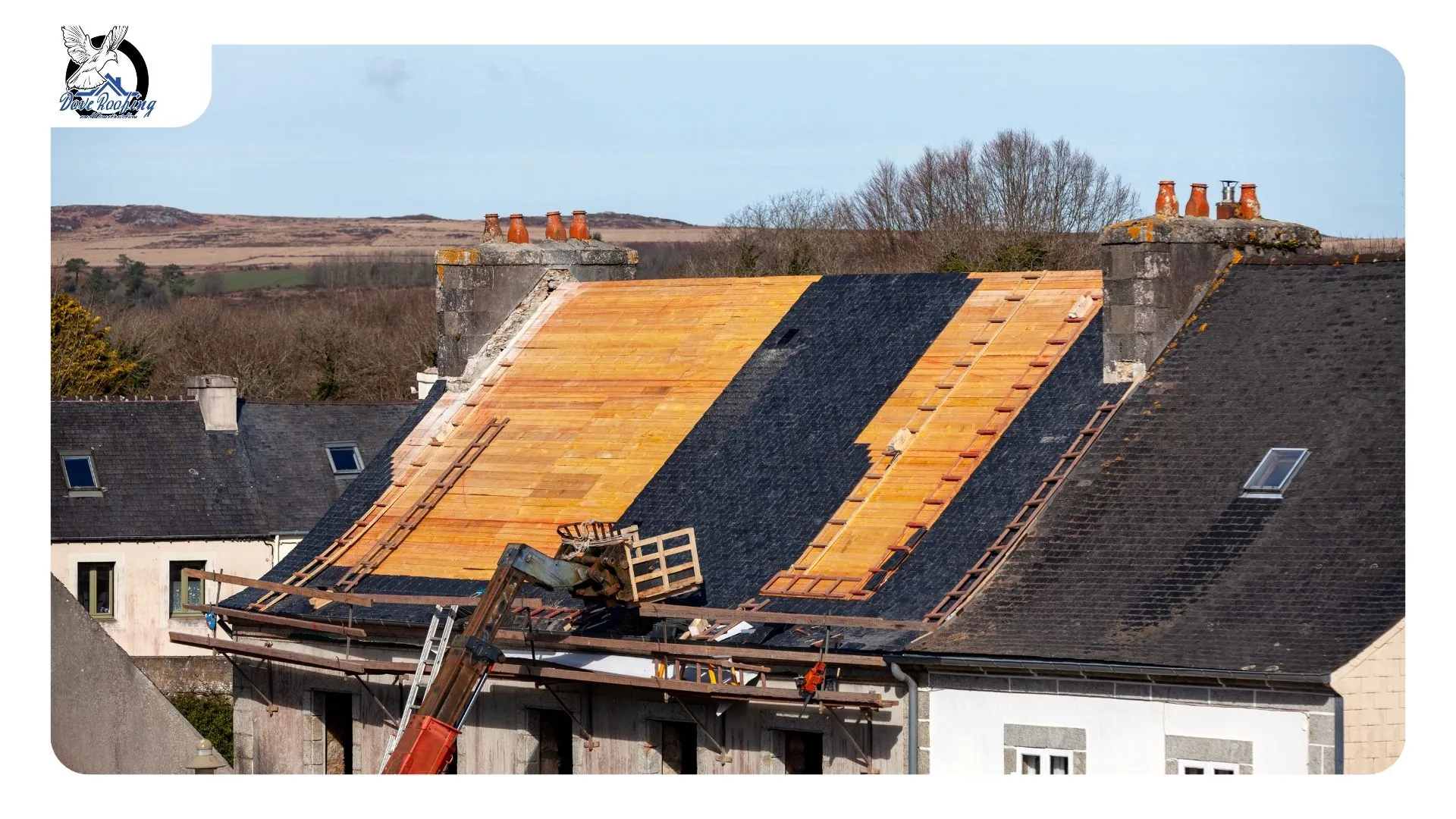
Roof replacement across Desert Hot Springs
We cover Desert Hot Springs proper — the Mission Lakes area, the resort district along Palm Drive, and the neighborhoods off Pierson Boulevard and Dillon Road — plus Desert Edge and Sky Valley east along Dillon Road, in ZIP codes 92240 and 92241.
We are based in Palm Springs, a short run up Indian Canyon, and also work in Palm Springs and Cathedral City. Re-roofs here are permitted through the City of Desert Hot Springs Building and Safety Division.
Dove Roofing and Construction holds California contractor license #871103 with the C-39 Roofing classification, verifiable at the CSLB license lookup. See roof replacement or completed desert work in our project portfolio.
Frequently asked questions
How much does a reflective roof change a summer cooling bill?
It keeps heat out of the attic. That matters more here than in milder places, because most Coachella Valley homes run their air conditioning ducts through the attic. A hot attic costs you twice: once through the ceiling, and again through the duct walls. The savings are real, but modest — attic insulation and duct sealing move the number further. And since Title 24 requires a compliant cool roof on most re-roofs anyway, it’s a saving that comes with a job you were already doing.
Which system lasts longest for the money in this heat?
Standing-seam metal lasts longest outright, at 40 to 50 years. Tile lasts 50-plus, but the underlayment underneath has to be relayed every 20 to 25 years. Measured by cost per year of ownership, both usually beat asphalt shingle even though they cost more up front. Which one is right for you comes down to how long you plan to keep the house.
Is it worth spending more on the roof to spend less on cooling?
Usually not on its own. The reflective part is already required by code on most re-roofs, so you aren’t buying it separately. If lower cooling bills are the goal, attic insulation and duct sealing give you more for every dollar than upgrading the roof material past what code asks for. Spend more on the roof for how long it lasts, how well it’s detailed, and what the warranty covers — not for cooling alone.
How long does a replacement take on a single-storey home?
Two to four working days is typical. The size of the roof, its pitch, how many old layers have to come off, and the condition of the decking underneath all affect that. Single-storey access makes staging and debris handling faster. Summer jobs stretch over more calendar days, because crews work from first light to midday — but every section that gets torn off is dried in the same day, no matter what.
What is the cheapest option that still lasts?
On a pitched roof: cool-rated asphalt shingle with a full tear-off and new flashing, which gives you 15 to 20 years here. On a low-slope roof: a single-ply membrane, at 20 to 25 years. If your spray foam is still sound, a recoat costs less than any replacement. If you have tile with failed underlayment, a lift-and-relay reuses the tile you already own. What should never be cut: the tear-off, the flashing, the grade of underlayment, or a stated rate for deck repair.
Visit or Call Us
Dove Roofing and Construction
Adress:P.O. Box 289 Palm Springs, CA 92263
Phone: (760) 702-7633
Hours: Mon–Sat 7am–7pm · Sun Closed
License: #871103 (C-39)
Serving Desert Hot Springs and surrounding areas including Desert Edge, Sky Valley, Palm Springs, and Cathedral City.
