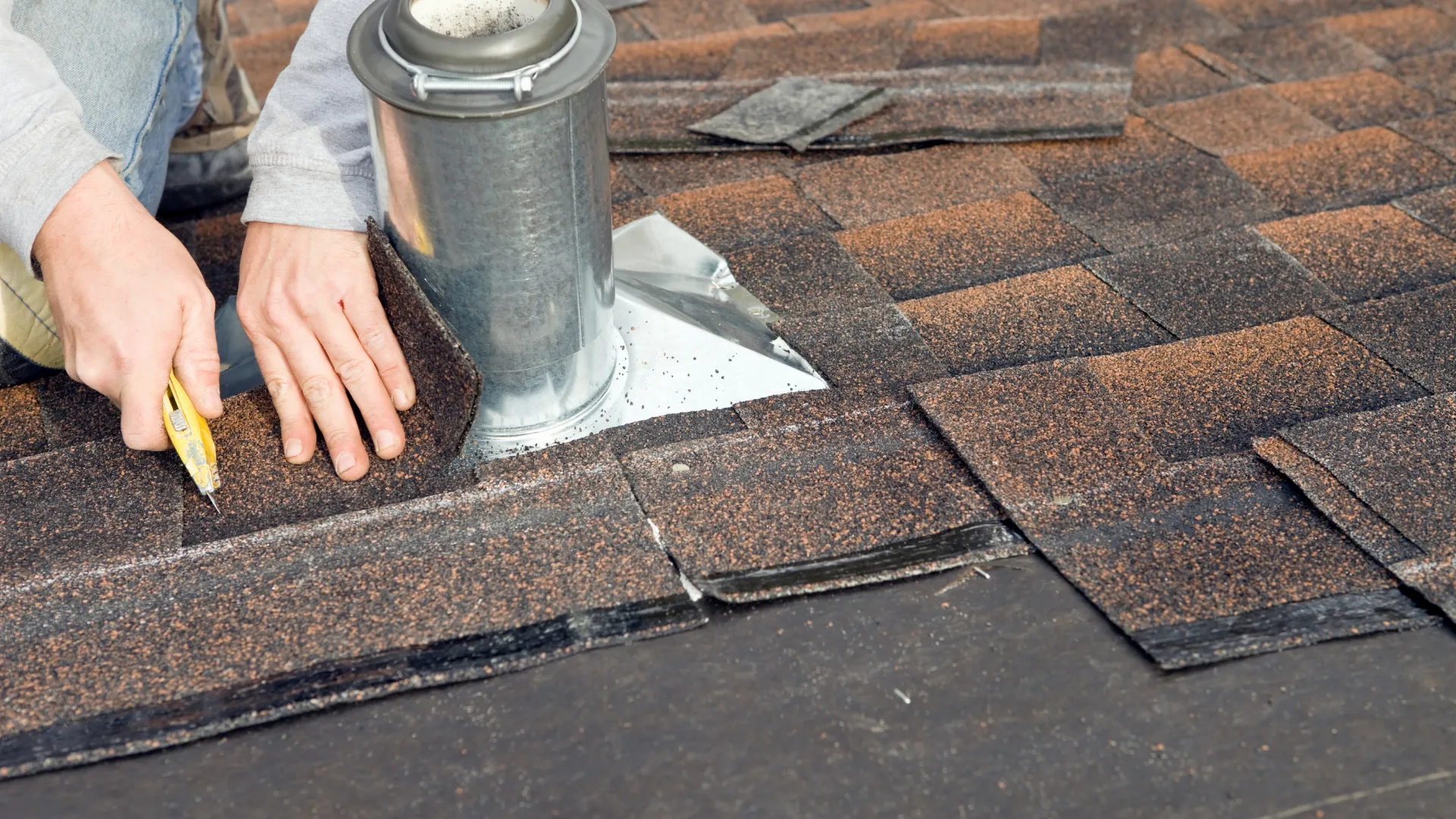
Is Roof Vent Leak Repair Just a Boot Fix in Palm Springs?
Roof vent leak repair usually starts with replacing the worn rubber boot or gasket around the pipe, then sealing the base so water cannot slip under it. But a boot is only one possible source. Confirm the vent is the leak first, or you will fix the wrong spot and the stain will return.
By David Berumen, Owner · Last updated November 2026
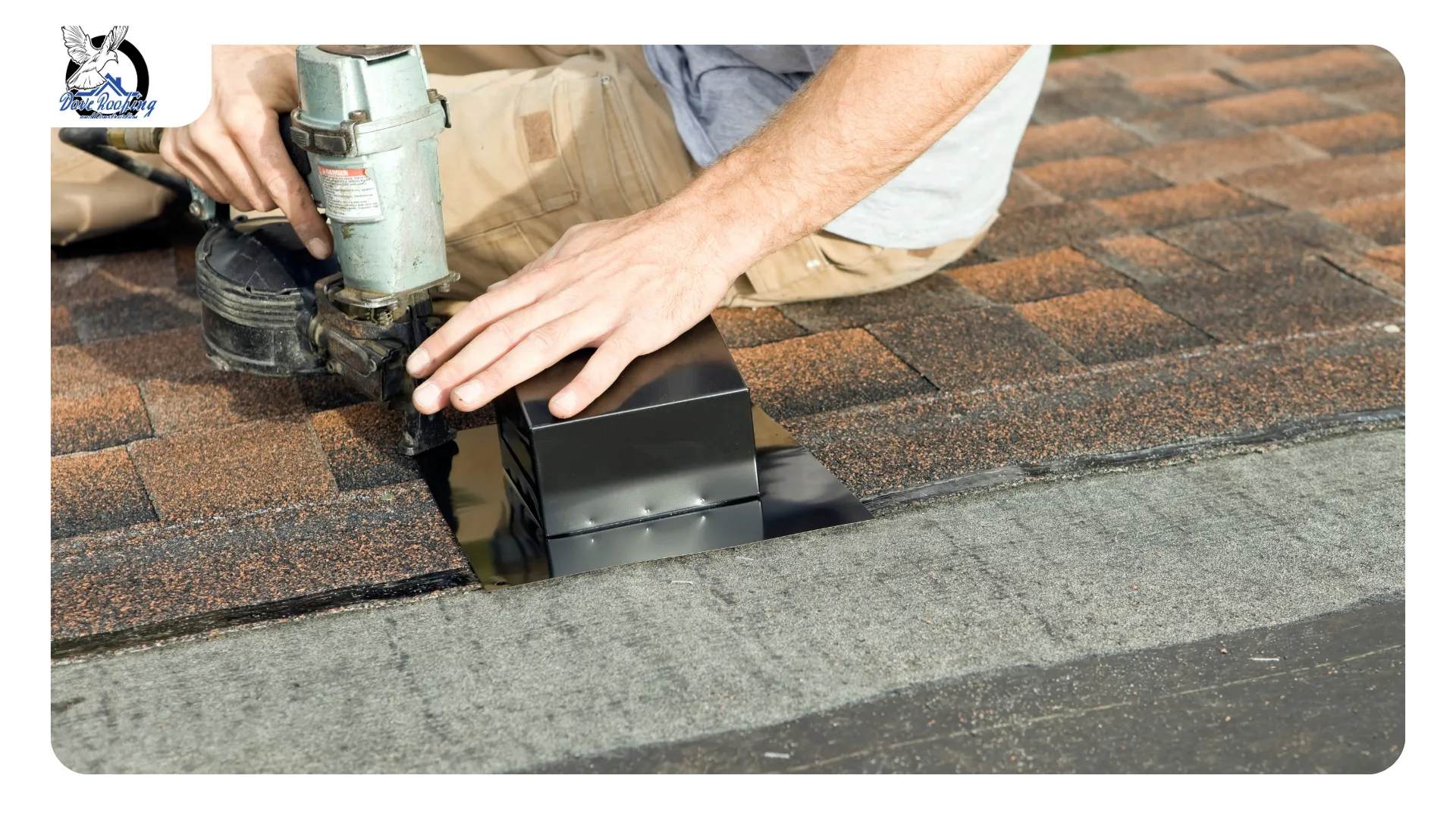
How can you tell a vent leak from other ceiling stains?
Look at where the stain sits and what is above it. A stain that lines up with a plumbing vent, exhaust fan duct or other roof penetration points to that vent. A stain far from any penetration may come from a tile, a flashing or a valley instead.
Roof leaks fool people because water does not drop straight down. It runs along the underside of the decking, follows a rafter, and shows up in the ceiling several feet from where it got in. That is why the stain alone is not proof. A pipe boot guide from Jaspector makes the same point: water travels behind the visible surface, so you have to check the neighboring surfaces too.
Here are the signs that point to the vent and not something else:
The boot is cracked, corroded, loose or missing.
The sealant around the base has split or pulled away from the pipe.
The stain is round or oval and centered under the vent, and it grows after rain.
The attic framing around the pipe is dark, damp or stained, while framing farther away is dry.
If you can reach the attic safely, go up with a flashlight on a dry day. Trace the pipe from the ceiling up to the roof deck and look for water tracks, dark rings and damp insulation around it. A dry attic on a day after rain does not clear the vent, because desert storms are short and the water may dry before you look. Check the same spot again right after the next storm.
In the Coachella Valley, long dry spells make this harder. The roof can sit baked for months, a monsoon cloudburst hits, and a boot that looked fine in August lets water in for the first time. The first rain after a dry stretch is the best test of every penetration on the roof.
What does roof vent leak repair involve?
A proper repair replaces the failed boot or gasket and seals the base. It is not a bead of caulk smeared over a crack. This Old House describes the repair as installing a new boot or gasket, with caulk at the base that creates a watertight barrier and secures the new boot. Caulk supports the repair; it does not replace the part that failed.
If you want to know how to fix a leaking roof vent, this is the order a roofer follows:
Find and confirm the source. Match the ceiling stain to the vent, then check the boot, the flange and the pipe.
Clear the area. Remove loose debris, old sealant and dust so the new parts sit on clean material.
Remove the failed boot or gasket. Lift the surrounding roofing as needed so the flange lies flat under the new boot.
Fit the new boot or gasket. It must slide over the pipe and seat tightly, with the upper edge shedding water over the pipe and not into it.
Seal the base. Apply sealant where the flange meets the roof surface, then check the fasteners.
Test it. Water the area from above and check the attic for new tracks.
On a tile roof, the work around the vent is more delicate, because tiles have to be lifted and set back without cracking. The state classifies roof tile work under the C-39 Roofing Contractor license, which the Contractors State License Board describes as installing products and repairing surfaces that seal, waterproof and weatherproof structures. That is the license class to look for when you hire.
Can caulk alone seal a leaking roof vent?
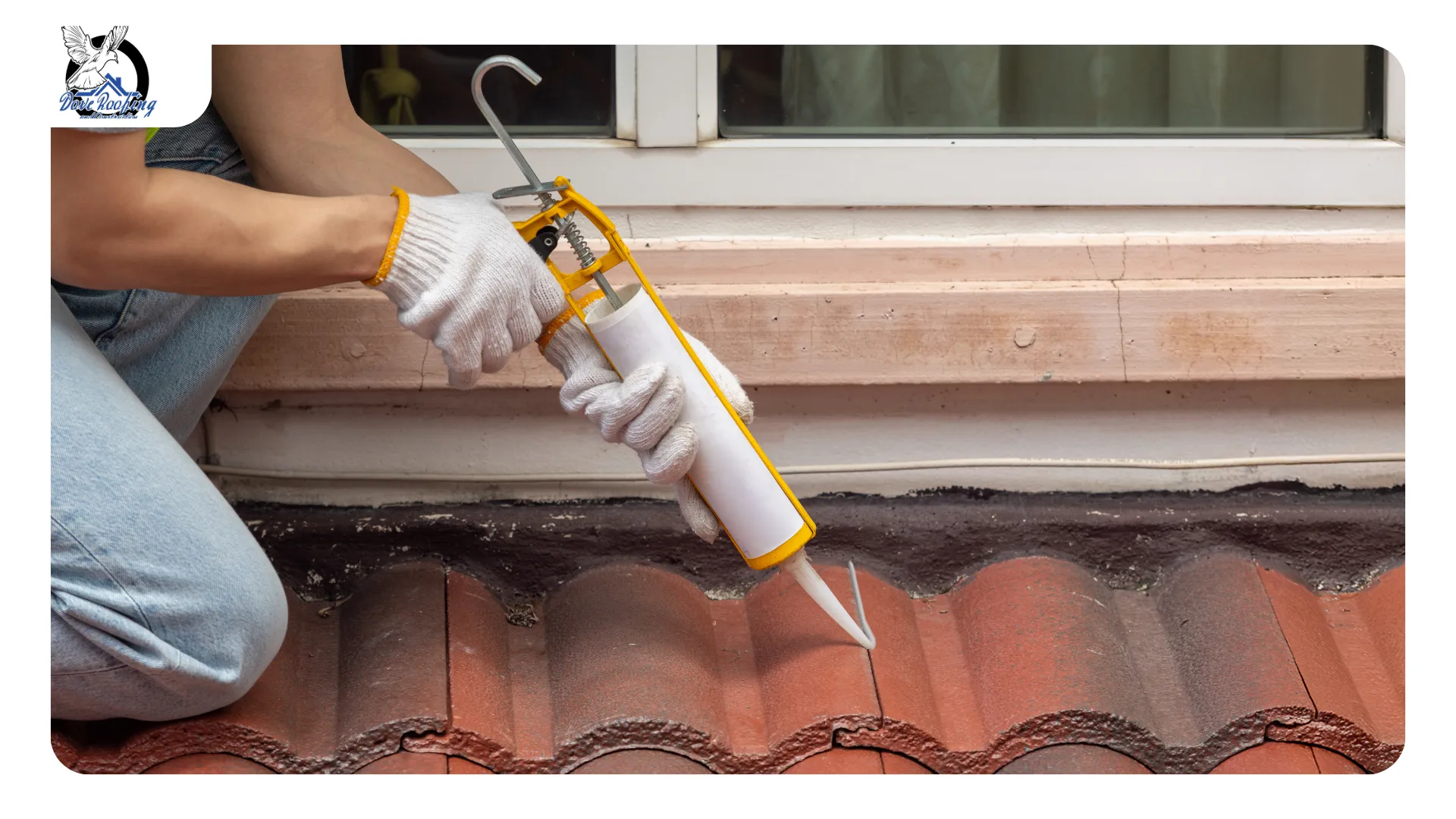
Usually no. Caulk can close a small gap, but it does not make a worn rubber boot whole again. Once the boot has cracked or shrunk away from the pipe, caulk is a patch on a part that is still failing.
Here is how to reseal a roof vent the right way. Resealing means renewing the seal at the base of a good boot, or placing a new boot and then sealing it. It does not mean piling sealant over a cracked collar. If the rubber is split, the base needs a new boot, and the sealant goes around the new one.
Caulk also has a limit under desert sun. Sealant that sits in direct heat for seasons gets brittle, pulls at its edges and opens a hairline path. If you caulked a vent and the leak came back, that is the sign the boot, the flange or the roof surface under it needs attention. Piling on more caulk will hide the problem for a while and let moisture keep working in the decking.
This Old House also recommends checking vent boots for wear, cracking and separation twice a year, and fixing any issue at once. That fits the valley well: a check in spring, before the hottest months, and one in fall, before the winter storms, catches most problems while they are small.
Is roof vent leak repair safe to do yourself?
It can be, if the roof is low and gentle, you have a helper and you are comfortable up there. It is not a good idea on a steep roof, and it is never a reason to take a risk with a ladder or a slope.
This Old House advises using a helper and a harness on steep pitches, and calling a pro if you are uncomfortable at heights or if the leak persists after a DIY repair. We agree. Roof tile is also slick with dust and sand, and a cracked tile under your boot is its own leak.
Before you go up, ask yourself three questions:
Can I reach the vent without standing on tile I might break?
Do I have a second person on the ground and a harness rated for the job?
If this repair does not stop the leak, will I stop and call someone, or keep adding sealant?
If any answer is no, that is your answer. You can still do the useful part from inside: take photos of the stain, mark its edge with a pencil and date, and note which room and wall it sits near. A roofer can start from that.
As for fixing the leak from the inside, you cannot repair a roof leak from the inside. What you can do is limit the damage while you wait. Put a bucket under the drip, move furniture out of the way and photograph the damage. The real repair happens on the roof, at the source.
What should a roofer check beyond the boot?
A good roofer looks at the whole path the water took, not only the part you can see. The boot is where the leak showed up, and it is often where it started, but not always.
Here is what we check on a vent leak call:
The flange. A bent or lifted flange lets water run under it even when the boot is sound.
The fasteners. Exposed nail heads around the vent can leak on their own.
The roof surface around the vent. Cracked tile, slipped tile or worn underlayment next to the pipe sends water to the same spot.
The pipe itself. A corroded or cracked pipe leaks inside the roof, and no boot will stop that.
The decking and attic framing. If water has been getting in for a while, the wood below needs a look before anything is closed up.
Neighboring penetrations. If one boot has failed, the others from the same era are close behind.
That last point matters more than most people think. Boots on the same roof age together, and the same sun that cracked one is working on the rest. Having them all checked on one visit saves a second call later.
If you suspect the leak started somewhere other than the vent, our post on where roof leaks start in Desert Hot Springs walks through the other common sources, and it applies to much of the valley.
When should a licensed roofer take over?
Call a licensed roofer when the vent is on a steep or tile roof, when you cannot confirm the source, or when a repair you already made has failed. A leak that returns after caulking is the clearest signal, because it tells you the cause is not what you sealed.
Also call when you find damp insulation, soft decking or staining in more than one place. Those mean water has been getting in longer than one boot can explain, and the repair is bigger than a part swap.
A licensed roofer brings three things a DIY fix does not: a way to work safely on your roof, a way to test the repair, and a written record of what was found. Our roof repair service covers vent boots and the roof surface around them. We hold CA License #871103 (C-39), and you can check any contractor's license on the CSLB classification page before they set foot on your roof.
We serve homeowners across the valley, and our Palm Springs roofing page lists the work we do in the city. Our earlier roof leak repair guide for Palm Springs covers leaks in general.
FAQ
What is the best way to repair a roof leak?
Find the real source first, then fix that part. For a vent, that means replacing the worn boot or gasket and sealing its base. For other leaks, it may be a flashing, a tile or a valley. A repair aimed at the wrong spot only delays the next stain.
How do I stop my roof leaking in heavy rain?
You cannot fix the roof during a storm, and you should not climb on it. Put a bucket under the drip, move belongings away, and photograph the damage. Once the roof is dry and safe, have the source found and repaired.
How much will it cost to fix a leak in my roof?
The cost depends on what is failing, how much of the roof is involved and what the roof is made of, so it cannot be set until someone inspects it. A vent boot is a small part, but water damage under it can widen the job. A free inspection and written estimate gives you the real answer for your roof.
How to fix a leaking roof vent?
Confirm the vent is the source, remove the failed boot or gasket, fit a new one and seal the base. Check the flange, fasteners and nearby roofing at the same time. If the roof is steep or you are not comfortable at heights, hand the job to a licensed roofer.
How to reseal a roof vent?
Clean the base, then renew the sealant where the flange meets the roof. That only works if the boot itself is sound. If the rubber is cracked or loose around the pipe, the boot needs replacing, and the new one gets sealed.
Visit or Call Us
Call for a free roof inspection and written estimate.
Dove Roofing and Construction
Address: P.O. Box 289, Palm Springs, CA 92263
Phone: (760) 702-7633
Hours: Mon to Sat 7am to 7pm · Sun Closed
License: #871103 (C-39)
Serving Palm Springs, Rancho Mirage, Palm Desert, Cathedral City, La Quinta, Indian Wells, Desert Hot Springs, Joshua Tree, Yucca Valley, Twentynine Palms, Riverside, Redlands, Corona, Moreno Valley, Menifee, Beaumont, Banning, Calimesa, Yucaipa, Wildomar, Rancho Cucamonga
