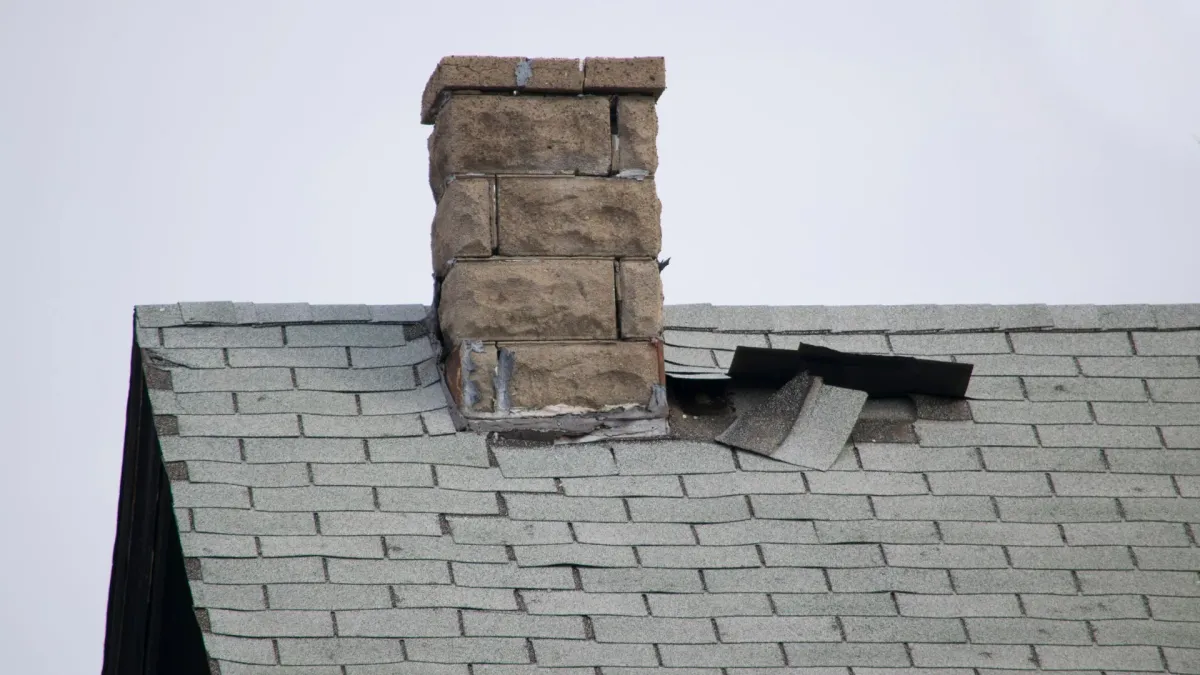
Where Roof Leaks Start: Desert Hot Springs Roof Repair
Where Do Roof Leaks Start on a Desert Hot Springs Roof?
On most Desert Hot Springs roofs, leaks start at a detail, not in the open field — a cracked tile, split flashing around a skylight or vent, or a dried-out pipe boot. Dove Roofing and Construction traces roof repair work back to that origin point instead of sealing the stain below it.
By David Berumen, Owner · Last updated October 2026
Why the stain inside is never directly under the leak
Water enters at the failure, then travels. It runs along the underside of the deck, down a rafter, across a ceiling joist, and drips wherever gravity finally lets it. A stain in a Desert Hot Springs hallway can easily start six or eight feet uphill from where it shows.
That is why chasing the stain almost never works. Caulk the ceiling side and the water simply finds the next low point. The fix has to happen where the water got in, which means someone has to get on the roof and work backward from the drip to the entry point.
It is also why so many DIY patches fail after one good monsoon. The sealant went on a spot that looked wet, not the spot that was actually open.
The five places leaks actually start out here
After 20-plus years on roofs across the Coachella Valley and the Morongo Basin, the same handful of failures account for most of what we get called out to repair in Desert Hot Springs.
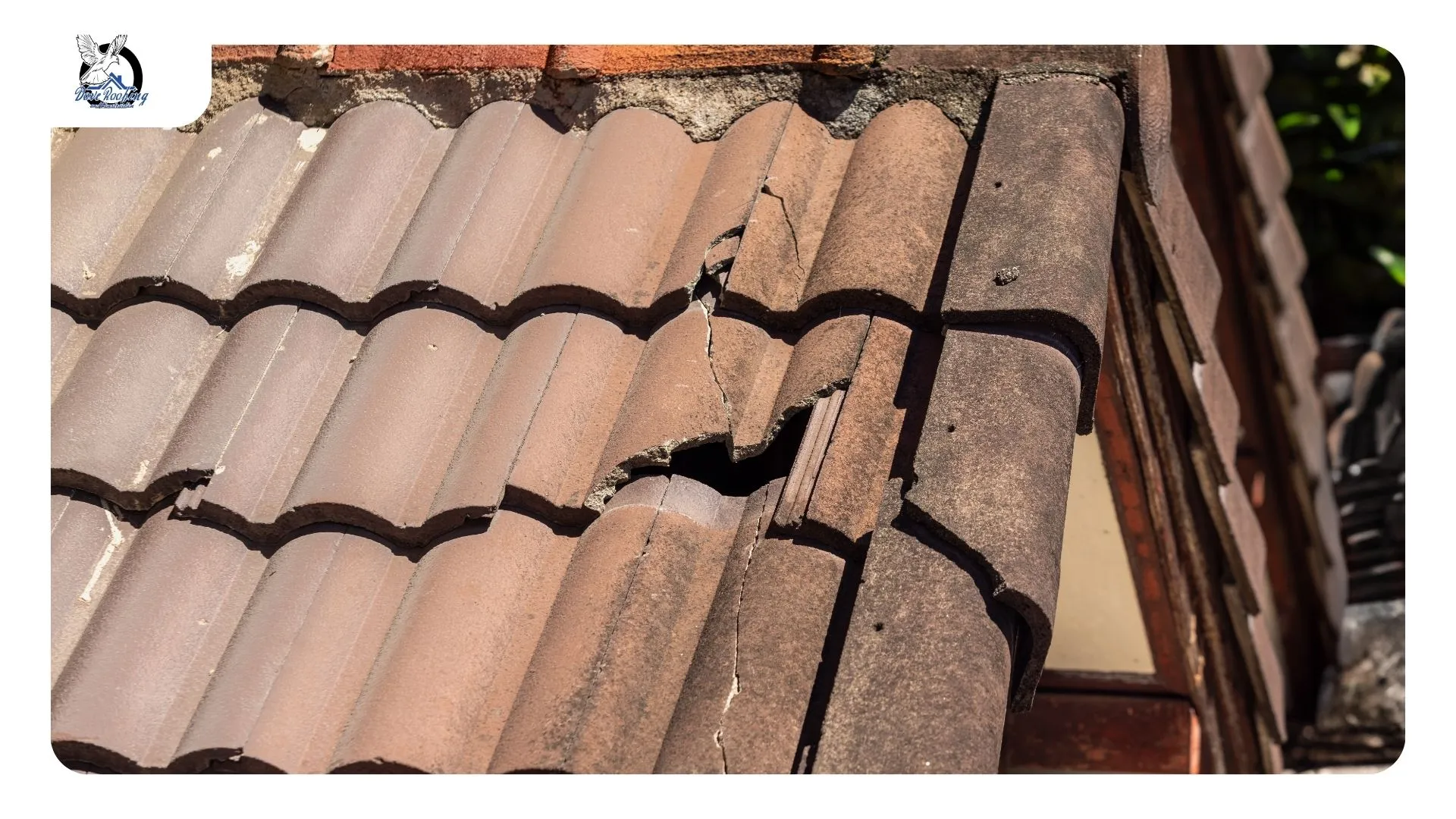
Cracked and slipped tile. Desert tile gets brittle. Decades of 115-degree afternoons and cool nights expand and contract it until something splits or slides out of course, opening a path straight to the underlayment beneath.
Flashing. The metal at chimneys, parapet walls, skylights, and vents is where most leaks begin — not in the open field of the roof. Rust, a lifted edge, or a seam that has worked apart will pass water long before the shingles or tile do.
Dried-out pipe boots. The rubber collar around a plumbing vent is the single most overlooked leak source on a desert roof. UV destroys rubber. Once it cracks, water runs down the outside of the pipe and straight into the attic.
Low-slope ponding. Flat and low-slope sections that hold standing water after a rain rot the deck from above, quietly, for months before anything shows inside.
Wind-opened edges. Desert Hot Springs sits right in the San Gorgonio Pass wind corridor. Gusts coming through the pass lift anything already loose — a shingle edge, a ridge cap, a piece of counterflashing — and grit-laden wind scours the sealant off what is left. This is the one that makes Desert Hot Springs different from a roof twenty miles down-valley in Indian Wells.
Park models and manufactured homes around Desert Edge and Sky Valley have their own version of the same list, with seams and roof-over edges taking the place of tile. We re-shingled a park model in Desert Hot Springs after a same-day estimate, and the homeowner's Google review still describes the turnaround better than we can: the work was quoted the day he asked, done on the agreed date, and the crew was gone in under two days. — Robert A.
How we trace a leak back to its source
Every repair visit starts the same way: on the roof, not from the ground and not from a drone photo.
We start under the stain and work uphill, because water runs downhill and the entry is always above the exit. From there we check the details in order — flashing, pipe boots, valleys, tile courses, ridge, then the field. We lift what needs lifting to see the underlayment, because a tile can look fine and still be sitting over a torn layer underneath.
Then you get a plain explanation of what failed and an itemized estimate before anything happens. No pressure to approve on the spot, and no pivot to a full roof replacement when a repair is the right call. The inspection is free and there is no obligation attached to it.
If the leak is active and water is coming in now, we prioritize same-day response, stabilize the roof to stop the intrusion, and schedule the permanent fix once the house is protected.
Is it worth repairing an older roof, or replacing it?
This is the question we get asked most, and the honest answer depends on whether the failures are isolated or everywhere.
If the damage is contained to one area — a valley, a run of flashing, a few cracked tiles — and the rest of the roof still has service life in it, repair is almost always the smarter spend. Tile roofs in particular often outlast their underlayment, which means the right job is a section repair, not a tear-off.
Replacement is the right call when failures are showing up across multiple slopes, when the underlayment has gone brittle everywhere we lift, or when the deck has rot in more than one place. Those roofs will keep leaking somewhere new every season no matter how well each individual patch is done.
We will tell you which situation you are in after we look. If you are weighing a bigger project, our Desert Hot Springs roof replacement guide walks through what that job involves, and routine maintenance is what keeps most roofs out of that conversation in the first place.
Where we work in and around Desert Hot Springs
We cover Desert Hot Springs proper — the Mission Lakes area, the Hot Springs resort district along Palm Drive, the neighborhoods off Pierson Boulevard and Dillon Road — plus Desert Edge and Sky Valley, in ZIP codes 92240 and 92241.
From our base in Palm Springs we are a short run up Indian Canyon, which is why we can hold a two-hour arrival window on this side of the valley instead of a vague all-day one. We also repair roofs in Palm Springs, Cathedral City, Yucca Valley, and Joshua Tree.
Dove Roofing and Construction holds California contractor license #871103 (C-39 Roofing), verifiable through the CSLB license lookup. Roof work in Desert Hot Springs is permitted through the City of Desert Hot Springs Building and Safety Division, and re-roofs in this climate zone fall under California's Title 24 cool-roof requirements — worth knowing before you compare bids, because a quote that ignores them is not a complete quote.
You can see completed desert work in our project portfolio, or read more about roofing repairs in Desert Hot Springs if you already know what needs fixing.
Frequently asked questions
Where do roof leaks usually start on a desert roof?
At the details, not the open field. Flashing around skylights, vents, chimneys, and walls is the most common origin, followed by cracked or slipped tile and dried-out rubber pipe boots. UV and the wind through the San Gorgonio Pass attack those points years before the main roof surface gives out.
Why is the stain inside not directly under the leak?
Because water travels before it drips. It enters at the failure, runs along the underside of the deck or down a rafter, and falls wherever it first finds a gap. The entry point is always uphill from the stain — sometimes by several feet — which is why we trace leaks backward from the inside evidence.
Is my roof worth repairing, or is it time to replace?
If the failures are isolated and the rest of the roof has service life left, repair is the better spend. If multiple slopes are failing, the underlayment is brittle throughout, or the deck is rotted in more than one spot, replacement stops the cycle of chasing a new leak every season. We give you a straight answer after inspecting, not before.
Can you repair a few cracked tiles without redoing the whole roof?
Yes. Cracked, slipped, and missing tiles get matched and reset, and we check and repair the underlayment beneath them so the fix is watertight rather than cosmetic. Tile roofs frequently outlive their underlayment, so a targeted section repair is often exactly the right job.
Do you offer free roof evaluations?
Yes. Every repair visit starts with a free, no-obligation inspection from on top of the roof, followed by an itemized estimate. There is no charge to find out what is wrong and no pressure to approve the work.
Visit or Call Us
Dove Roofing and Construction
Adress:P.O. Box 289 Palm Springs, CA 92263
Phone: (760) 702-7633
Hours: Mon–Sat 7am–7pm · Sun Closed
License: #871103 (C-39)
Serving Desert Hot Springs and surrounding areas including Desert Edge, Sky Valley, Palm Springs, Cathedral City, Yucca Valley, and Joshua Tree.
