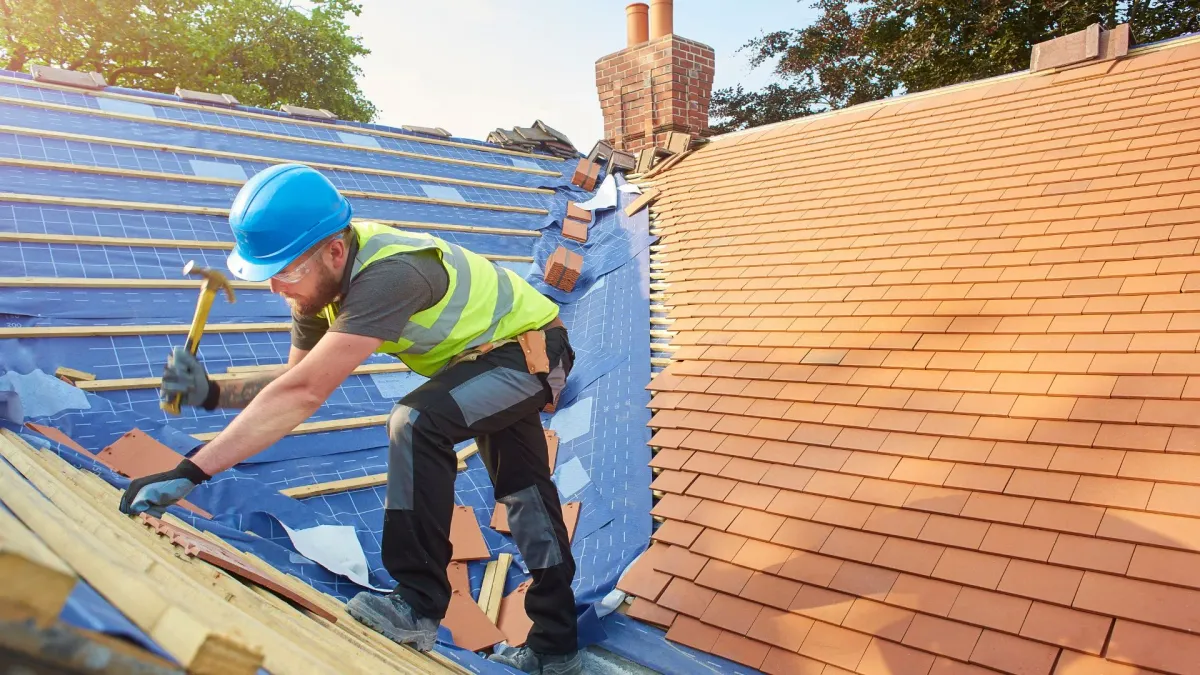
What Happens in a Desert Hot Springs Roof Replacement?
What Happens During a Desert Hot Springs Roof Replacement?
A typical Desert Hot Springs roof replacement runs two to four days: property protection and tear-off on day one, deck inspection and repairs, then dry-in and the new roof system, finishing with cleanup and a city inspection. Most homeowners stay in the house the entire time.
By David Berumen, Owner · Last updated October 2026
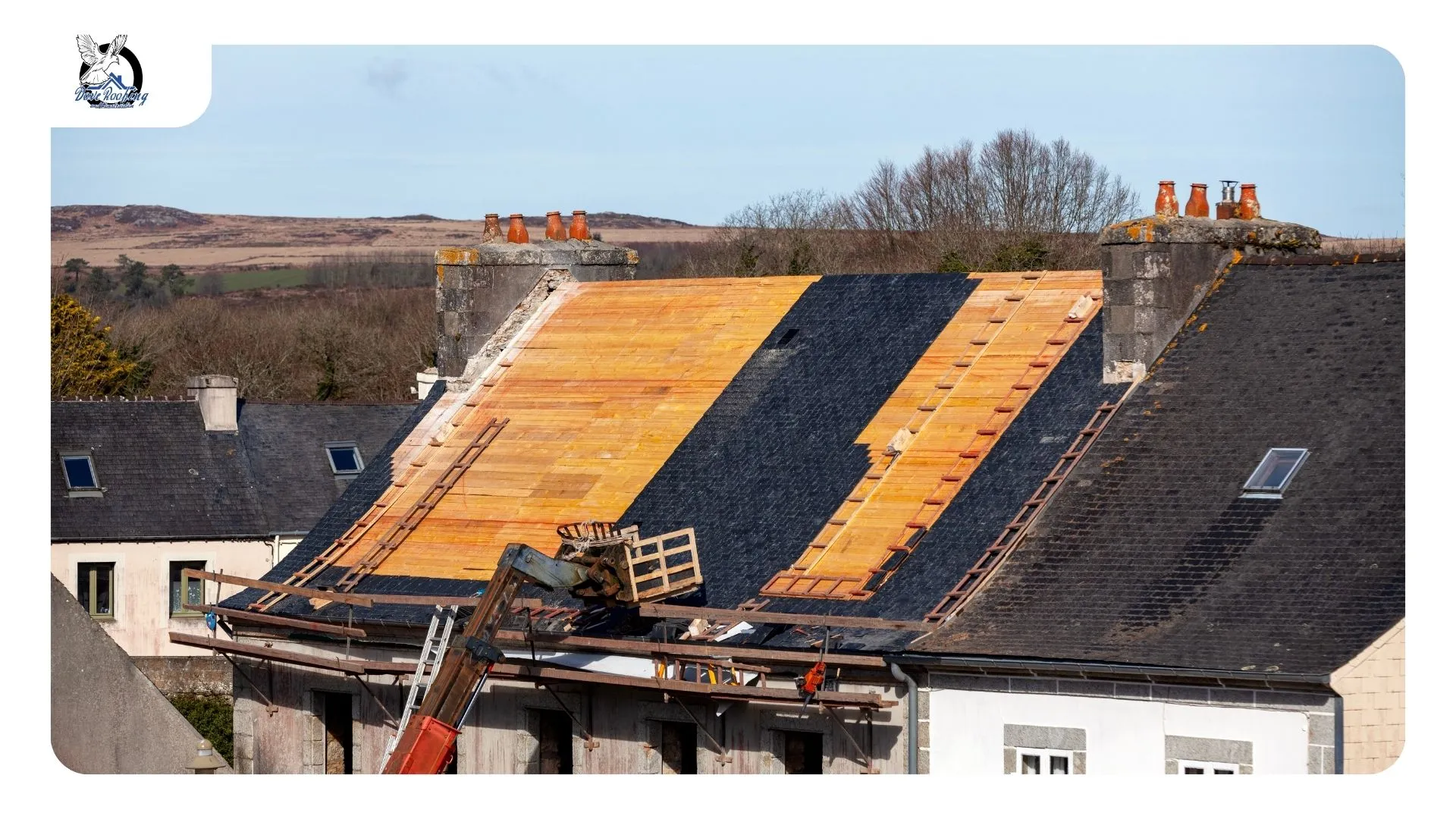
Is a tear-off better than roofing over the old roof?
Out here, almost always yes.
Roofing over — laying new material on top of the old — is cheaper on paper and occasionally allowed by code. The problem is that it hides exactly what you need to see. In the desert, the layer that usually fails first is the underlayment, not the tile or shingle on top of it. Cover it over and you have paid for a new roof while leaving the actual failure sealed inside the assembly.
A full tear-off also lets us look at the deck. Twenty years of UV, wind-driven grit through the San Gorgonio Pass, and the occasional monsoon that found a cracked pipe boot leaves marks on the wood that nobody can see from on top of an intact roof.
There is a weight issue too. A second layer adds dead load to a structure that was engineered for one, which matters on older Desert Hot Springs homes and on park models in Desert Edge and Sky Valley where the roof framing is light to begin with.
The exception is a foam or coating system over a sound flat roof, which is a legitimate recovery rather than a cover-up. We cover those under specialized roofing systems.
What actually happens, day by day
Before anything comes off. We pull the permit through the City of Desert Hot Springs Building and Safety Division, stage materials, and walk the property with you. Every re-roof in this climate zone also has to meet California's Title 24 cool-roof requirements, so the material spec gets settled before the truck shows up, not during.
Day one, early. Crews start at 7am here for a reason — tear-off in a Coachella Valley afternoon is dangerous work and hard on materials. Protection goes down first, then the old roof comes off in sections and goes straight into the dumpster.
Deck inspection. With the roof open we check every square foot of decking and fascia for rot, delamination, and failed fasteners. This is the part you are really paying for, and it is the part a roof-over skips entirely.
Dry-in. Underlayment goes down the same day the tear-off happens on that section. Your house is never left open overnight. During monsoon season from July through September that is not a nicety, it is the whole job.
The new roof. Tile reset or new tile, shingles, foam, or a single-ply system — whatever you specified. Flashing at every wall, skylight, vent, and chimney gets rebuilt rather than reused, because that is where the next leak would otherwise start.
Cleanup and inspection. Magnet sweep, debris haul, and a final walkthrough, then the city inspection closes out the permit.
Two to four days is typical for a single-family home. Park models and smaller structures often finish faster — we re-shingled one in Desert Hot Springs and were off the property in under two days, which the homeowner noted in his review.
Do you have to move out during a roof replacement?
No. In twenty-plus years and more than 5,000 roofing projects, almost nobody moves out.
What you should plan for is noise. Tear-off is loud, it starts early, and it carries. If you work from home, take calls somewhere else on tear-off day, or let us schedule that phase around a day you are out.
A few practical things: park outside the work zone so your car is not under the drop line, take pictures off the walls in rooms directly below the roof because the vibration can shift them, and keep pets inside and away from the perimeter. If anyone in the house is sensitive to dust, close the windows on the work side.
You will have power, water, and full use of the house the entire time. We are off the property by 7pm each evening, and the site is left secured.
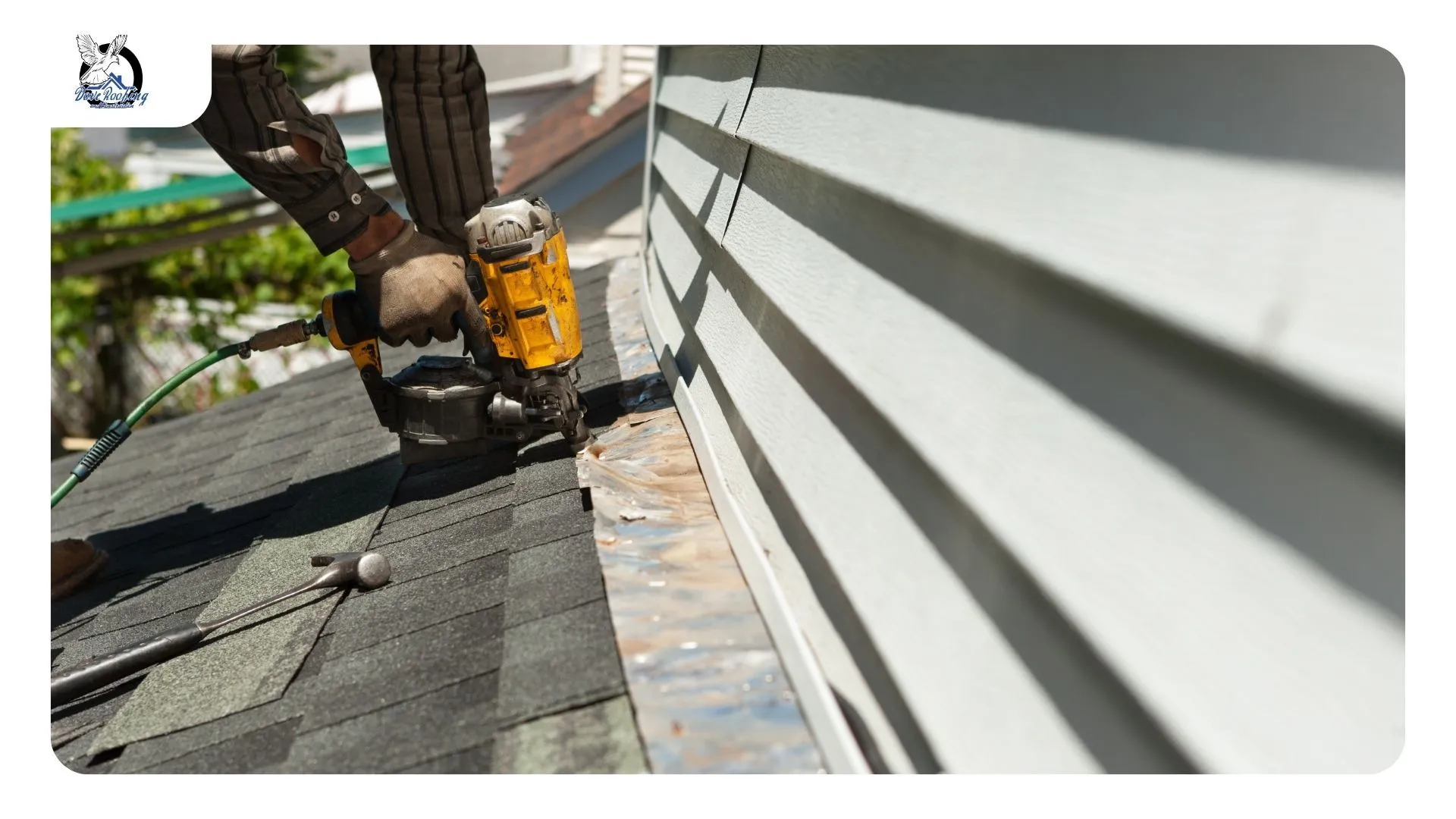
How we protect the pool, landscaping, and driveway
This is where desert re-roofs differ from everywhere else, and it is worth asking any bidder about directly.
Rock and decomposed granite yards. Most Desert Hot Springs homes have rock landscaping rather than grass. Nails disappear into DG and gravel in a way they never do on a lawn, and a magnet sweep over loose rock is far less forgiving. We tarp the yard before tear-off so debris never reaches the rock in the first place, then sweep on top of that.
Pools and spas. Roofing debris in a pool is an expensive mistake. Pool surfaces and surrounding decking get covered before the first tile comes off, and we keep the dumpster and drop zone on the opposite side of the structure wherever the lot allows.
Driveways. Dumpsters go on plywood, not directly on your concrete or pavers. Loaded roofing dumpsters are heavy enough to crack a driveway and mark it with rust.
Wind. Desert Hot Springs sits in the pass. Tear-off debris that would sit still anywhere else travels here. Loose material gets contained and hauled continuously rather than piled and dealt with at the end of the day.
Our crews clean up at the end of every working day, not just at the end of the job. You can see completed desert work in the project portfolio.
What if something unexpected turns up under the old roof?
Sometimes it does. Dry rot in a valley, a soft section of decking over an old leak, fascia that has gone punky where a gutter overflowed for years. You cannot know until the roof is open.
Here is how we handle it: work stops, we photograph it, and you get a call with what we found and what it costs to fix before anyone picks up a hammer. We cut out the damaged decking and fascia and rebuild it solid before closing the roof back up, so nothing gets sealed inside.
What we do not do is discover a problem and bill you for it afterward. You approve the change or you do not. If a quote you are comparing does not say how deck repair is priced, ask before you sign — that is the line item surprise bills usually hide in.
Where we replace roofs in and around Desert Hot Springs
We cover Desert Hot Springs proper — the Mission Lakes area, the resort district along Palm Drive, and the neighborhoods off Pierson Boulevard and Dillon Road — plus Desert Edge and Sky Valley, in ZIP codes 92240 and 92241.
We are based in Palm Springs, a short run down Indian Canyon, which is how we hold two-hour arrival windows on this side of the valley. We also re-roof in Palm Springs, Cathedral City, Yucca Valley, and Joshua Tree.
Dove Roofing and Construction holds California contractor license #871103 (C-39 Roofing), verifiable through the CSLB license lookup. If you are still deciding between fixing and replacing, our roof repair services page covers when a repair is the better spend, and who replaces roofs near Desert Hot Springs covers materials and cost factors for the valley.
Frequently asked questions
What happens step by step during a roof replacement?
Permit and material staging, then property protection, tear-off in sections, full deck and fascia inspection, same-day dry-in with new underlayment, installation of the new roof system with rebuilt flashing, cleanup with a magnet sweep, and a final city inspection to close the permit. Most Desert Hot Springs homes take two to four days.
Do we need to move out or stay off the property?
No. Almost every homeowner stays in the house. You keep power, water, and full use of the home throughout. Plan for early-morning noise on tear-off day, park outside the work zone, keep pets indoors, and take pictures off the walls in rooms directly beneath the roof.
Is a full tear-off better than roofing over the existing roof?
In the desert, yes in nearly every case. The underlayment usually fails before the surface material does, and roofing over seals that failure inside the assembly while adding dead load to framing designed for one layer. A tear-off is also the only way to inspect the decking. Foam or coating recovery over a sound flat roof is the legitimate exception.
How do you protect landscaping, pool, and driveway during the work?
Rock and decomposed granite yards get tarped before tear-off begins, since nails are far harder to recover from gravel than from grass. Pool surfaces and decking are covered before any material comes off. Dumpsters sit on plywood rather than directly on concrete or pavers. Debris is hauled continuously because of the wind through the pass, and crews clean up at the end of every working day.
What happens if something unexpected is found under the old roof?
Work stops and you get photos and a price before any additional work proceeds. Rotted decking and fascia are cut out and rebuilt solid rather than covered over. You approve the change order first — nothing gets added to the bill after the fact.
Visit or Call Us
Dove Roofing and Construction
Adress:P.O. Box 289 Palm Springs, CA 92263
Phone: (760) 702-7633
Hours: Mon–Sat 7am–7pm · Sun Closed
License: #871103 (C-39)
Serving Desert Hot Springs and surrounding areas including Desert Edge, Sky Valley, Palm Springs, Cathedral City, Yucca Valley, and Joshua Tree.
