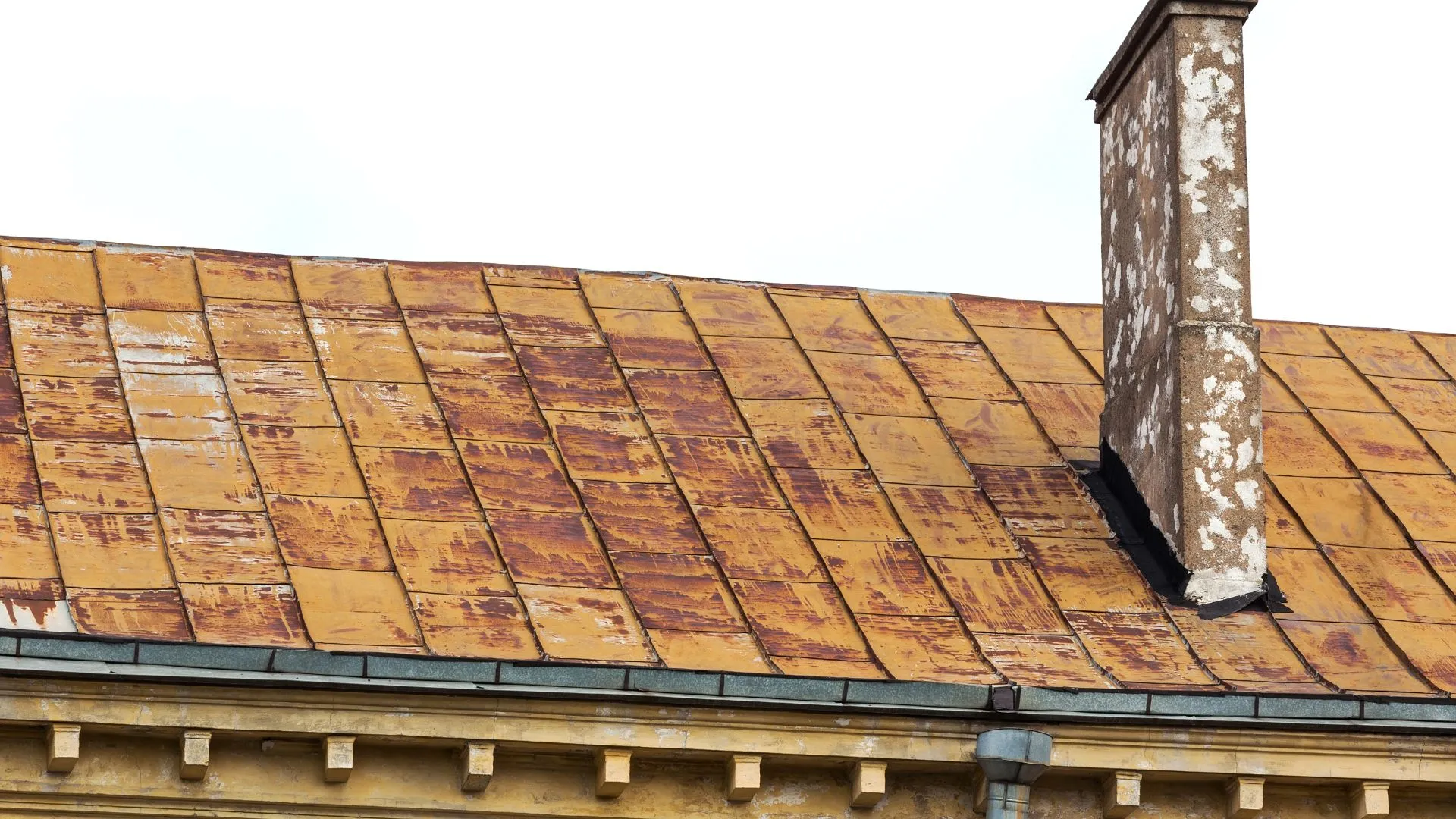
Roof Repair Near Me: Wind Damage in Desert Hot Springs
Roof Repair Near Me: Wind Damage in Desert Hot Springs
Out here the damage usually starts at the edge, not the middle. Wind pressure on a roof is highest at the corners and perimeter, so that is where seams lift, edge metal works loose, and coatings wear through first. Dove Roofing and Construction repairs those failures across Desert Hot Springs, Sky Valley and North Palm Springs.
By David Berumen, Owner · Last updated November 2026
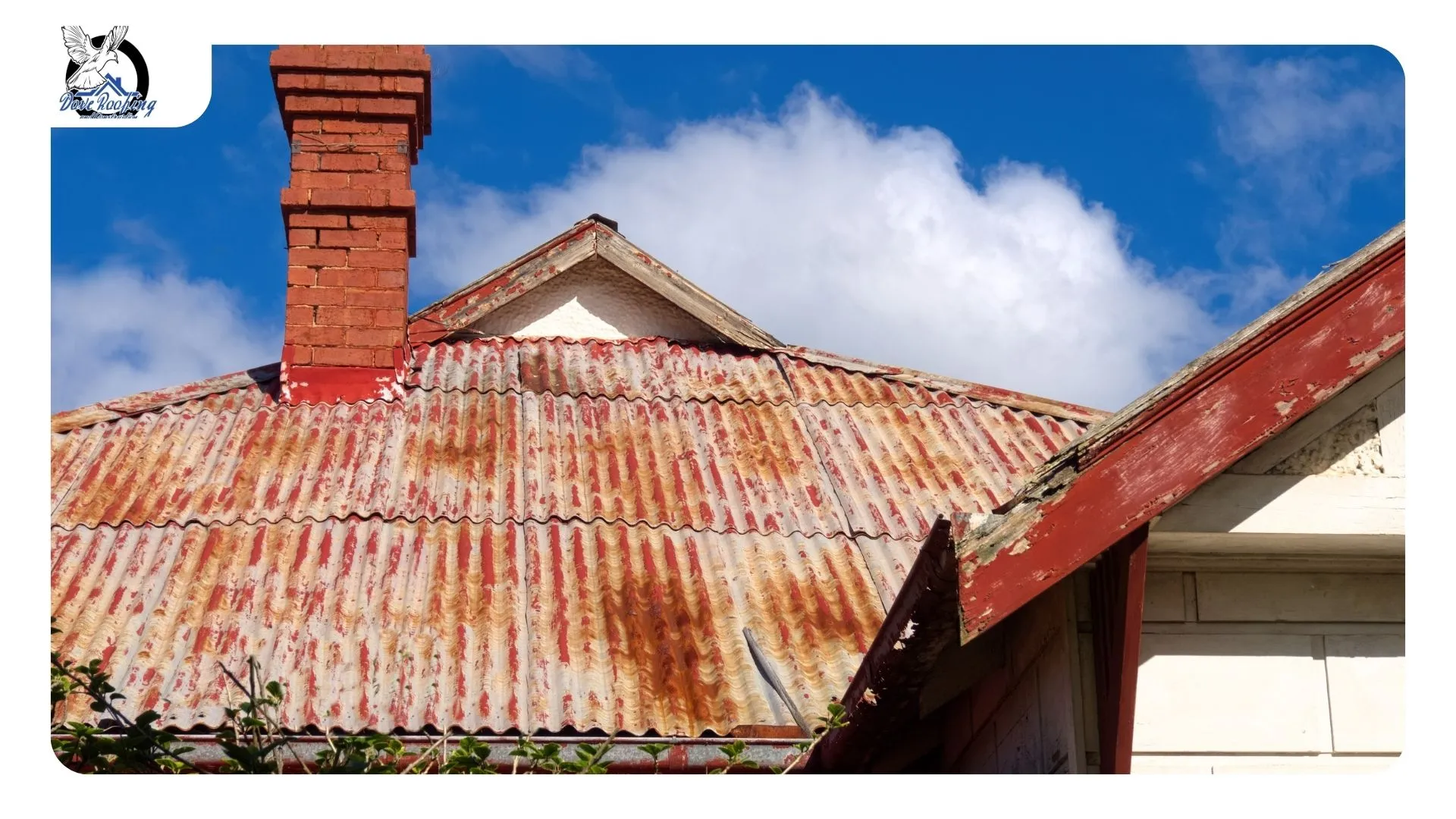
Why do roof edges lift in high wind?
Because the wind does not push down on a roof evenly. It does not really push down at all.
Air moving over a building accelerates as it crosses the edge, and that acceleration creates suction — uplift pulling the roof surface away from the structure. That suction is not uniform. Wind engineering divides a roof into three zones, and the numbers are not close:
Roof zone | Relative uplift |
|---|---|
Field (the open middle) | Baseline |
Perimeter | Noticeably higher |
Corners | Highest of the three |
Under the pressure coefficients in ASCE 7-16, the corner value runs roughly twice the field value. The same gust that a roof's open middle shrugs off is working about twice as hard at the corner — every time it blows.
Which is why, as that same engineering literature puts it, most high-wind roof failures begin at the perimeter edges. It also explains something homeowners find odd: a roof whose field looks perfect can be actively failing along three feet of its border.
Two consequences worth knowing. Edge metal on a low-slope roof is a tested, rated component — the standard is ANSI/SPRI ES-1, which the building code requires, not an optional upgrade. And the 2016 revision of ASCE 7 actually expanded the perimeter and corner zones compared with the previous edition, meaning more of a roof now sits in the high-uplift band than older designs assumed.
In Desert Hot Springs, Sky Valley and North Palm Springs, none of this is theoretical. The San Gorgonio Pass funnels wind through this exact stretch of the valley — the turbine farms out at North Palm Springs and Whitewater are there precisely because it is the windiest ground around. Your roof is in the same wind the turbines are harvesting.
What does wind damage look like on a flat or foam roof?
Different from tile, and easier to miss. On a tile roof the evidence is obvious — slipped tiles, a cracked piece in the yard. On a low-slope roof the signs are subtle until they are not.
Edge metal standing proud of the surface. Drip edge or termination bar that has lifted even slightly off its plane. Run a hand along it; a loose section moves.
Seams opening at the laps. On single-ply, the heat-welded seam is the weak line. A seam that has started to peel shows a fine dark line where dirt has worked in.
Fasteners backing out. Small raised bumps in a pattern across the membrane. The fastener has worked loose and is pushing the sheet up.
Billowing or fluttering. If a membrane visibly moves in a gust, it has already lost attachment somewhere.
Foam torn or gouged at the perimeter. Foam is firm but not armor. Where wind has gotten under an edge it tears rather than lifting cleanly.
Debris lodged at parapets and scuppers. Palm fronds and gravel carried by gusts pile up where the wind drops them, then block drainage.
The pattern that should concern you most is damage concentrated along one edge or corner rather than scattered randomly. That is wind, and it will continue at the same spot.
Our guide to roofing repairs in Desert Hot Springs covers the repair side generally, and if a specific storm caused the damage, what to do in the first 48 hours covers documentation and insurance.
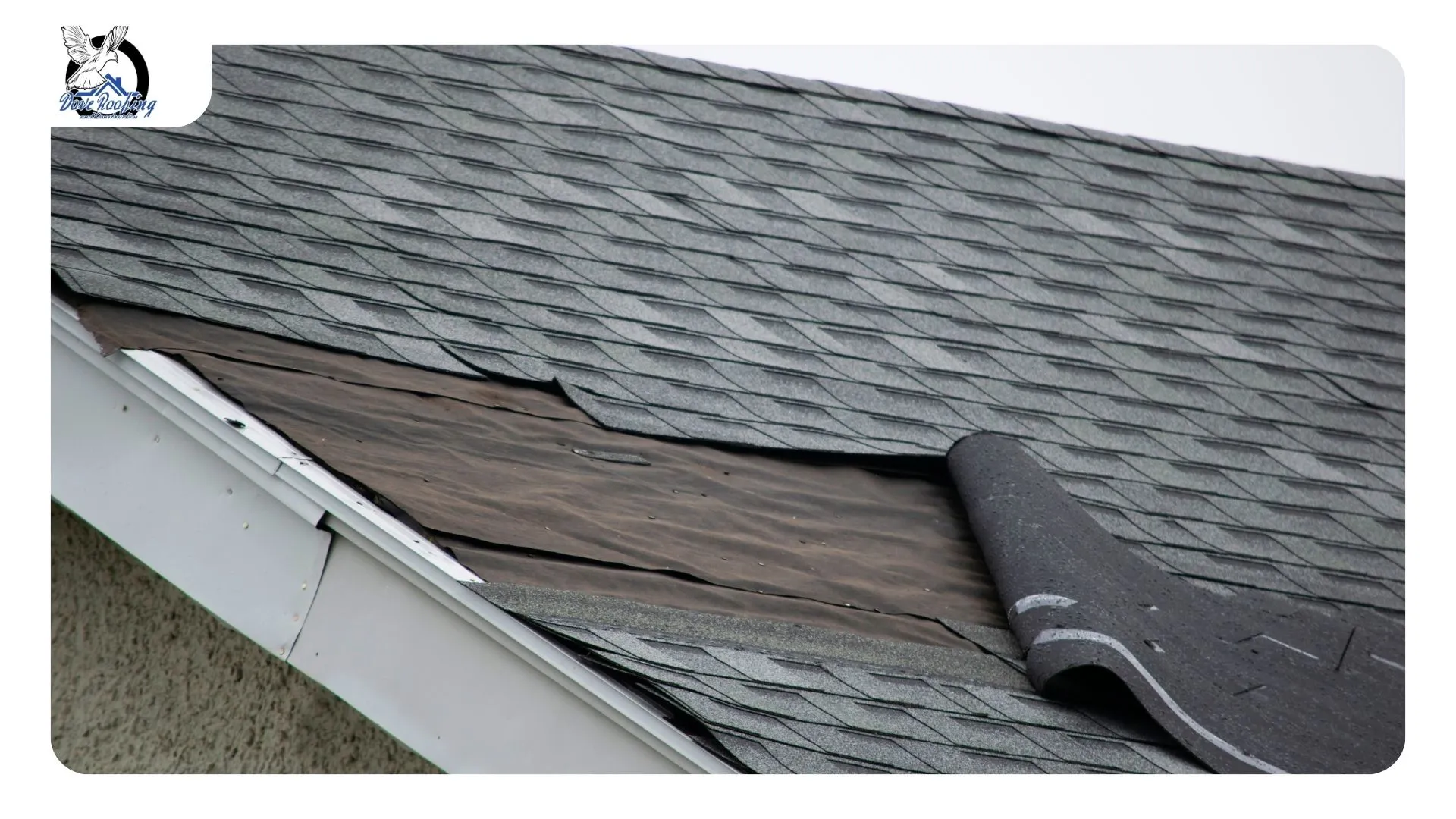
Sand abrasion: the failure nobody quotes for
This is the one that separates a roof in Sky Valley from the same roof twenty miles down-valley, and almost nobody writes about it.
Wind through the pass does not arrive clean. It carries fine sand, and sand moving at speed is an abrasive. Over years it does to a roof coating roughly what a very slow sandblaster would — it thins the surface, preferentially on the windward side and at any raised edge, parapet, or curb where the airflow concentrates.
What it looks like in practice:
Uneven coating thickness across a roof that was coated uniformly. The west and north-facing exposures are thinner.
Polished or scoured patches where the surface has lost its texture entirely.
Foam showing through at leading edges while the field coating still looks sound.
Granule loss on shingle concentrated on the exposed slope rather than spread evenly.
The important part: abrasion is a surface failure before it is a structural one. Caught while it is still the coating, it is a cheap fix. Left until the sand has worn through to the foam beneath, UV gets at the foam, and you are into a much larger job. Our foam and coating systems page covers how those assemblies are built.
This is also why a roof out here needs looking at on a schedule rather than when something leaks. Abrasion produces no drip until the day it does.
Can a worn coating be patched where sand has worn it?
Usually yes, and this is the good news in the post.
Elastomeric and acrylic coatings are designed to be renewable. Where abrasion has thinned an area but not breached it, the surface is cleaned, prepared, and recoated — and a properly prepared patch bonds to the existing coating rather than sitting on top of it as a visible repair.
The honest limits:
Spot repair works when the wear is localized, the foam or membrane beneath is dry and intact, and the surrounding coating is still sound enough to bond to.
A full recoat is the better buy when thinning is widespread — which it often is, because the mechanism causing it operates across the whole windward exposure. Patching five spots on a roof that is thin everywhere means being back next year.
Replacement is the answer only when the substrate itself is compromised — saturated foam across large areas, or a failed deck. Confirmed by core cuts or an infrared scan, not assumed.
A contractor who looks at a worn coating and goes straight to a replacement quote has skipped two cheaper answers that may well have been correct.
How fast does this need dealing with before the rains?
Faster than most people assume, because the two problems compound.
Wind opens the edge. Rain then has a path. Between about November and March the valley sees what winter rain it gets, and the monsoon window from July through September brings the heavier events — so an edge opened by wind in the dry months is an entry point waiting for the first storm that arrives.
The cost curve is steep in the same way it always is. A lifted section of edge metal is a small repair. The same opening after water has been into the assembly is wet insulation, then deck, then interior work.
The practical rule: wind damage at an edge or seam is not something to watch through a season. It is a repair, and it is a cheap one while it is still only the edge. Twice-yearly maintenance catching it before the rains is the whole point of the cadence, which our Desert Hot Springs maintenance guide goes into.
Where we work in the wind corridor
We cover Desert Hot Springs proper — the Mission Lakes area, the resort district along Palm Drive, and the neighborhoods off Pierson Boulevard and Dillon Road — plus Sky Valley and Desert Edge east along Dillon Road, and North Palm Springs out toward the pass, in ZIP codes 92240 and 92241.
We are based in Palm Springs, a short run up Indian Canyon, which is what makes a same-day look at an open edge practical on this side of the valley. We also work in Palm Springs and Cathedral City.
Dove Roofing and Construction holds California contractor license #871103 with the C-39 Roofing classification, verifiable at the CSLB license lookup. See roof repair or completed desert work in our project portfolio.
Frequently asked questions
Why do edges and seams fail first in a wind corridor?
Because wind creates suction rather than downward pressure, and that suction is far stronger at a roof's corners and perimeter than in its open field — the corner value runs roughly twice the field value under current wind-design coefficients. Edges and seams are also the mechanical weak points of the assembly, so the highest load lands on the least continuous part of the roof. Most high-wind roof failures start there.
What does wind damage actually look like on a flat or foam roof?
Edge metal standing slightly proud of the surface, seams peeling at the laps with a dark line of dirt worked in, fasteners backing out as small raised bumps, membrane that visibly flutters in a gust, foam torn or gouged at the perimeter, and debris piled at parapets and scuppers. Damage concentrated along one edge or corner rather than scattered randomly is the signature of wind.
Can a worn coating be patched, or does the whole surface need redoing?
Patched, when the wear is localized, the substrate beneath is dry and intact, and the surrounding coating is sound enough to bond to. A full recoat is the better buy when thinning is widespread, which is common because wind-driven sand abrades the whole windward exposure rather than isolated spots. Full replacement is only warranted when the foam or deck underneath has failed, confirmed by core cuts or infrared scanning.
How quickly should wind damage be dealt with before the rains?
Promptly, because the two compound. Wind opens an edge or seam during the dry months, and the first significant rain then has a path straight into the assembly. A lifted section of edge metal is a small repair; the same opening after water has entered means wet insulation, then decking, then interior work. This is not damage to watch through a season.
What does a repair cost against waiting for a full replacement?
Repairs at the edge-and-seam stage are a fraction of a replacement, and the gap widens the longer the opening stays. The variables are how much edge or seam length is involved, access, and what is found once the surface is opened. Any figure quoted before someone has been on the roof is a guess — the inspection is free either way.
Visit or Call Us
Dove Roofing and Construction
Adress:P.O. Box 289 Palm Springs, CA 92263
Phone: (760) 702-7633
Hours: Mon–Sat 7am–7pm · Sun Closed
License: #871103 (C-39)
Serving Desert Hot Springs and surrounding areas including Sky Valley, North Palm Springs, Desert Edge, and Palm Springs.
